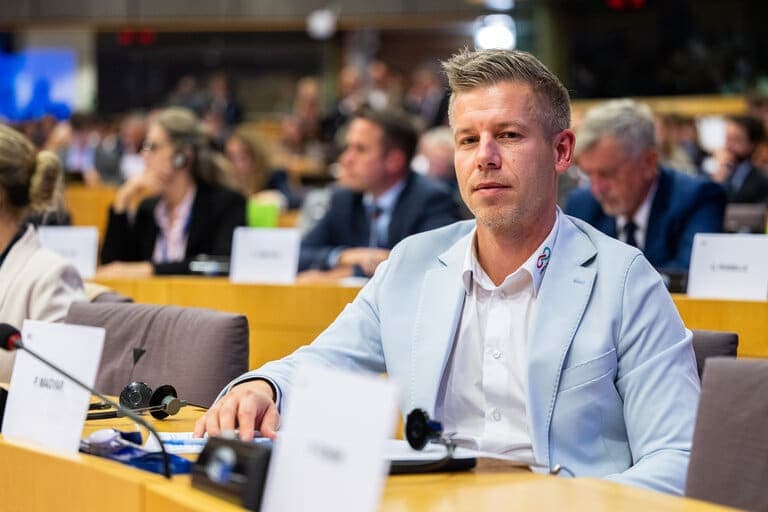
Magyar, leader of the new opposition party Tisza, is considered a serious rival ahead of the Hungarian elections scheduled for April next year. While the country struggles with inflation and economic stagnation, support for his opposition party is growing. The Hungarian government wanted to lift Magyar’s parliamentary protection in order to prosecute him, but critics argue this was primarily a political attempt to silence the opposition.
The European Parliament quickly dismissed the Hungarian request. Orbán reacted angrily. On social media, he called the decision “disgraceful, disgraceful” and accused the EU of interfering in Hungarian affairs. Pro-government Hungarian media portray the decision as part of a broader “witch hunt” by Brussels against Budapest.
The issue surrounding Magyar is not isolated. The parliamentary committee decision coincided with the presentation of a new (draft) report by Dutch MEP Tineke Strik (GroenLinks-PvdA). She is the EP’s ‘Hungary rapporteur’. Her report finds that the rule of law crisis in Hungary has deepened further in recent years.
Additionally, she points to systematic violations of minority rights, including those of LGBTIQ+ individuals and asylum seekers, who have been targeted by hate campaigns and discriminatory policies. Critical NGOs are also reportedly under constant pressure due to intimidation and the cutting off of funding sources.
Strik therefore calls on the European Commission and EU countries to take more extensive measures. She mentions freezing even more Hungarian EU funds and even suspending Orbán’s voting rights in the Council of Ministers.
The report builds on earlier EU investigations from 2018 and 2022, which also warned about declining democratic standards in Hungary. The fact that those warnings previously had little concrete effect fuels Strik’s call for truly tough action now.
For Orbán, the double message from Brussels—the retention of Magyar’s immunity and a new critical report—means EU pressure is increasing. But the Hungarian prime minister does not appear ready to step back.
Magyar himself can view the rejection of the request to lift his immunity as a victory. It enables him to continue his campaign towards next year’s elections without the immediate threat of prosecution. This keeps him a formidable challenger to Orbán, whose power position seems to be weakening after fifteen years in government.