The CO₂ levy at the border should apply not only to basic materials and raw materials but also to a long list of finished products that include, among others, steel and aluminum. The European Parliament is going further than the European Commission had proposed. The final position was adopted with 464 votes in favor, 50 against, and 159 abstentions.
Competition
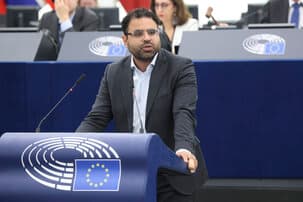
The proposal was prepared by Dutch S&D MEP Mohammed Chahim, who is rapporteur for the revision of the carbon border adjustment mechanism CBAM. With the expansion, Strasbourg wants to prevent European producers from being disadvantaged compared to cheaper foreign competitors from countries without environmental and climate laws.
The rules against avoidance of the import levy must also become stricter. Parliament wants to be able to act faster when small adjustments to products are used to avoid the levy. At the same time, normal business decisions to reduce production costs should remain outside that stricter approach.
Compensation
In addition, Parliament wants to establish a temporary fund for European producers competing in export markets with companies that do not have to pay a comparable CO₂ price in their non-EU countries. Parliament wants to make this financial support available from 2027 through 2029. The European Commission had proposed to start the fund later.
The fertilizer sector receives special attention in this regard. The European Parliament wants European fertilizer factories and farmers facing higher CO₂ costs to also be eligible for support. Among others, urea, ammonium nitrate, and ammonium sulfate would be added to the list of products for which support could become possible.
Not entirely free
At the same time, negotiations are underway in Brussels about adjustments to the European system (ETS) in which companies must pay for their emissions. The European Commission wants to keep hundreds of millions of extra emission allowances available and reduce the number of available allowances more slowly. This could lower costs for energy-intensive companies.
Parliament opts for a more limited expansion in one part of this. Currently, all emission allowances above a threshold of 400 million are ultimately canceled. The Commission wanted to abandon this and keep the allowances as a buffer. Parliament wants to maintain the cancellation but raise the threshold to 650 million starting February 2027.
Climate policy
Thus, two major reforms of European CO₂ climate policy run in parallel. For the CBAM import levy, Parliament chooses expansion to more products and stricter protection against avoidance. For emissions trading, it seeks more room for companies without fully adopting the easing proposed by the Commission.
The changes are not yet final. Further negotiations on the expansion of CBAM and adjustments to the emissions trading system will take place between Parliament, the European Commission, and EU countries. The costs for European industry and agriculture as well as investments in reducing CO₂ emissions will be central to these talks.