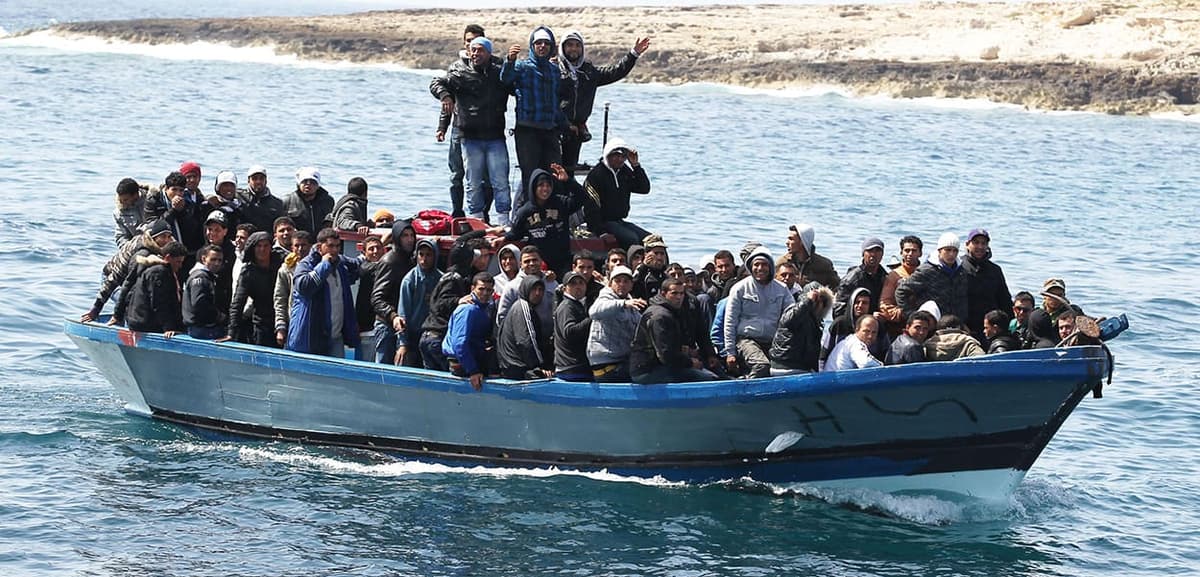
Refugee organizations have already warned that 'the EU is putting asylum law on the shelf.' They point out that the new rules make it possible for EU countries to temporarily accommodate asylum seekers (while the application is being processed) in camps outside EU territory, for example in North African countries or in Balkan countries.
Italian Prime Minister Meloni has already made efforts in that direction and had such camps established, but that was overturned by the European Court of Justice.
The European Union will soon make it possible to send asylum seekers back without lengthy assessment procedures. It will also make it possible to deport migrants to third countries. This paves the way for processing asylum procedures outside the borders of the EU.
According to supporters, the goal is to speed up procedures and create clarity. By assessing applications more quickly, people who are not entitled to protection can be sent back sooner.
The vote was supported by a coalition of center-right and (radical) right-wing factions. Together, they formed a majority that guided the reform through Parliament.
Opponents from progressive factions voted against and voiced strong criticism. They fear that the new approach will lead to erosion of fundamental rights.
Human rights and refugee organizations speak of a dangerous shift in European asylum policy. According to them, it will become more difficult for non-Europeans to obtain real protection within the European Union.
They warn that transferring asylum seekers to third countries can lead to situations where people have less legal protection. There is also concern that responsibilities will be pushed outside the EU.
Supporters emphasize that the rules are necessary to keep the asylum system manageable. They argue that member states must have more control over migration flows.
With Parliament’s approval, a next step has been taken in the reform of European asylum policy. Later this year, EU countries and the Parliament still need to agree together on many implementation details. Among other things, there is still the question of whether EU countries must take over asylum seekers from each other or contribute financially.
The article European Parliament wants to send asylum seekers back to another safe country sooner first appeared on IEDE NEWS.