The European Parliament believes that Czech Prime Minister Andrej Babiš must repay his European subsidies. As prime minister, he exerted direct influence over the awarding of European subsidies to his own agro-chemical company Agrofert, according to the European Commission.
Businessman Babiš has been continuously part of the Czech government since 2014 and has served as prime minister since 2017. He is also the head of Agrofert, a large corporation trading in chemical agricultural products. Although he formally placed his control under two holding companies, he still retains full control over them.
The European Parliament has long been concerned about the situation in the Czech Republic, where under Babiš a conflict of interest has arisen between government and business. The conclusions relate to unjustified subsidies from the EU regional funds, and a separate investigation is ongoing regarding the agricultural funds received by Babiš’s company.
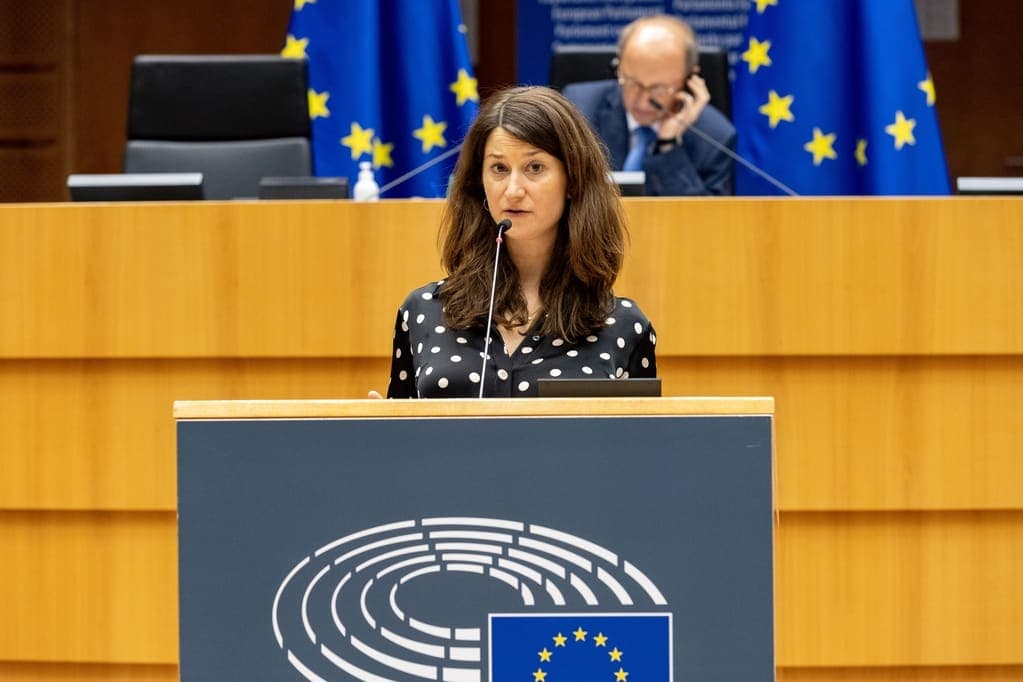
Dutch MEP Lara Wolters (PvdA), on behalf of the Budget Control Committee (CONT), co-drafted a report on this matter. Next month, a resolution will be voted on in the parliament. Over recent years, government leaders and heads of state have refused to comment on their colleague Babiš.
This issue has in part led to a cap being set on payments to large agricultural enterprises in the new Common Agricultural Policy (CAP), and to the CAP funds being distributed among multiple recipients.
Some MEPs argue that the Babiš case should not be used as a reason to expand EU controls and say that individual countries should perform these checks better. Others contend that practice proves the opposite.
According to PvdA MEP Lara Wolters, it is now clear that Babiš is capable of supporting his own company with European public funds. In 2018, 2019, and 2020, the European Parliament already adopted resolutions highlighting the abuse of EU agricultural funds in the Czech Republic and the possible involvement of Prime Minister Babiš.
The Parliament also demanded more transparency about the recipients of EU funds. Currently, member states are not obliged to disclose who receives agricultural subsidies, but the European Anti-Fraud Office (OLAF) is now releasing information only sparingly. Partly because of this, it has become clear that in many EU countries agricultural subsidies ('euros per hectare') in recent years have mainly gone to a small number of large landowners.