

In the European Parliament, not only the green and left-wing opposition threatens to vote against the new CAP agricultural agreement, but also the largest possible minority of the social-democratic S&D group.
According to German SPD politician Maria Noichl, the S&D group will give the green light for the new Common Agricultural Policy only with the smallest possible majority and 'with a heavy heart.'
Noichl was one of the shadow rapporteurs of the European Parliament who reached a provisional agreement at the end of June with the Portuguese presidency. Most of the resistance came from agricultural organizations and several EU countries opposing the 'environmental obligations' (Green Deal and Farm to Fork) of Commissioners Frans Timmermans (Climate and Environment), Stella Kyriakides (Health and Food Safety), and Janusz Wojciechowski (Agriculture and Rural Development).
Promotion
The European Parliament negotiators will present their negotiation agreement this week to the EP’s AGRI agricultural committee. Afterwards, it still needs to be approved later this year by the full European Parliament. It is already known that a portion of the liberal Renew group considers the currently proposed new agricultural policy 'not sustainable enough.'
Furthermore, last week the chairwoman of the Budgetary Control Committee, German Christian Democrat Monika Hohlmeier (EPP), called the negotiation agreement 'a failure.' According to her, the EP negotiators have failed to put an end to cronyism and the embezzlement of EU funds.
In an interview with Agrarzeitung, Hohlmeier criticized that EU subsidies are still distributed per hectare, resulting in 80 percent going to 20 percent of agricultural landowners, mostly in Central and Eastern European EU countries.
Much agricultural funding continues to go to the treasurers and directors of agricultural cooperatives, collectives, companies, and foundations. This maintains an influential lobby of administrators and prevents much EU money from reaching farmers’ incomes.
Hohlmeier (daughter of the former German CSU politician Franz-Josef Strauss) thereby aligns herself with earlier criticism from Agriculture Commissioner Wojciechowski and the AGRI committee. They also believe that more EU funding should reach (small) farmers instead of (large) landowners, but the EP negotiators were unable to reverse this with the Agriculture ministers.
The Agriculture ministers have previously expressed satisfaction with the new agricultural policy, which will be less EU-centralized going forward, but largely shaped by a country-specific set of tasks. Such national strategic (agri-) plans require annual Brussels approval but offer more exceptions per country.
Because the revision of the EU agricultural policy has been negotiated for several years and now—finally—a negotiation agreement from EP rapporteurs and shadow rapporteurs is on the table (which already has the consent of the 27 Agriculture ministers), it is not expected that the European Parliament will block the agreement. Doing so would mean starting all over again. However, many components still need to be translated into (legal) final texts.
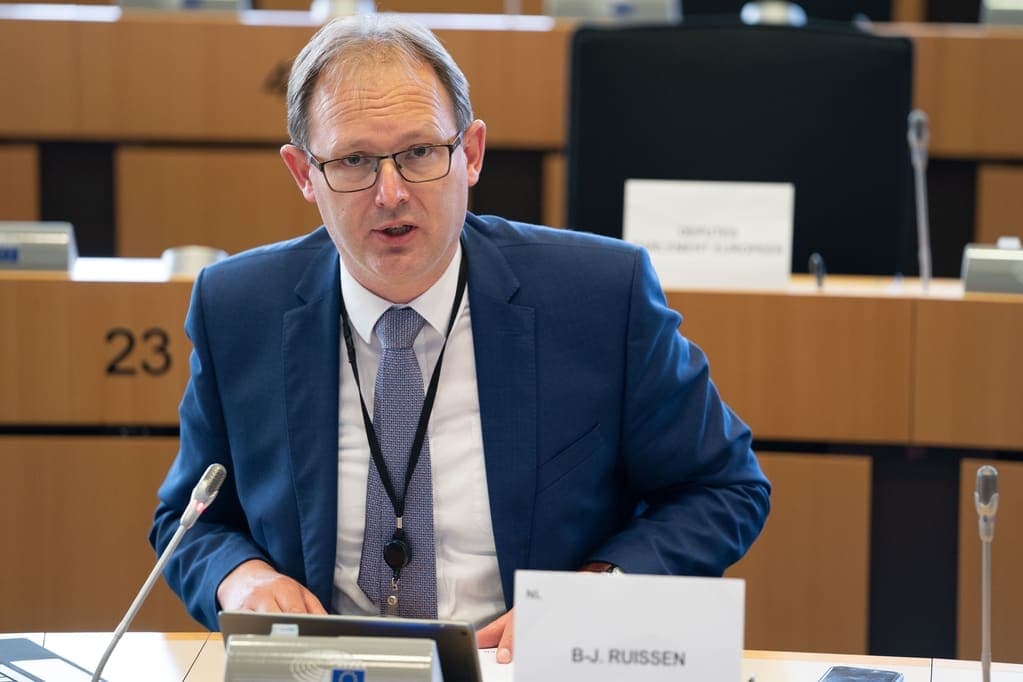
Bert-Jan Ruissen (SGP), the only Dutch negotiator on the European Parliament side, calls the compromise “ambitious but workable for the farmer.” Ruissen points out that Timmermans’s proposal to mandate 10% of agricultural land to remain fallow has been reduced to 3% with certain exceptions. “This package offers sufficient flexibility for EU countries to keep it workable for farmers. It is now up to the Netherlands to give this proper shape.”
Even if MEPs from the three major political groups do not help the proposal reach a majority, sufficient support is still expected from the right-wing, conservative, and nationalist opposition groups. Especially they get what they wanted: less centralized EU policy, more national exceptions, as few climate restrictions as possible, and no capping of payments.
It is not yet known when the negotiation agreement will be submitted for a vote by the full plenary European Parliament.