

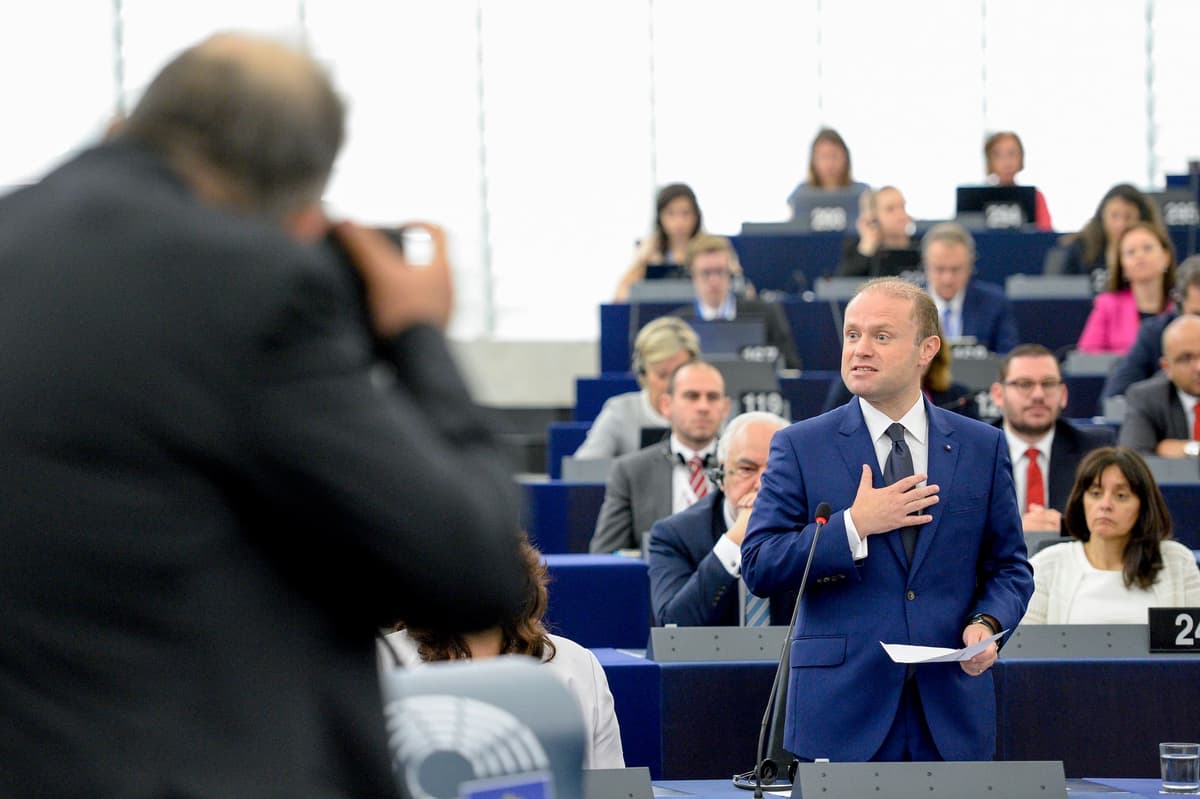
Prime Minister Joseph Muscat of Malta will step down next month. The controversial prime minister is under heavy fire for covering up fraud and corruption. In the aftermath of the high-profile murder of investigative journalist Daphne Caruana Galizia in 2017, several political figures had already resigned. Muscat announced that he will resign on January 12. His resignation had been anticipated for days.
Muscat has been prime minister since 2013. On Sunday, protests against him and other politicians took place again in Valletta. With Muscat remaining in power for another six weeks, he can continue to interfere in the investigation into businessman Fenech. Among the population there is still fear that the entire matter will be swept under the rug.
On Monday, an investigative mission from the European Parliament will depart for Malta, insisting that Maltese politicians no longer interfere with the judicial investigation into corruption and murder. The mission is led by the Dutch liberal MEP Sophie in ’t Veld.
Promotion
Yesterday, prominent Maltese businessman Yorgen Fenech was officially charged as the mastermind behind the murder of Galizia. She died in a car bomb attack; she had written critically about corruption on the island. Fenech denies any involvement in the murder. He has offered to cooperate with the investigation in exchange for amnesty.
Fenech was arrested last week as he tried to leave Malta on his private yacht. The businessman turned out to be the owner of a Dubai-based company, 17 Black, which Galizia had revealed had ties to Maltese politicians. At that time, it was not yet clear that Fenech was behind it.
Malta has inadequate oversight regarding money laundering and terrorist financing. Wealthy foreigners can buy a passport there. This allows them to travel freely within the European Union. They can also open bank accounts and establish companies in EU countries. There are many concerns within the EU about the corrupt environment in this small member state.