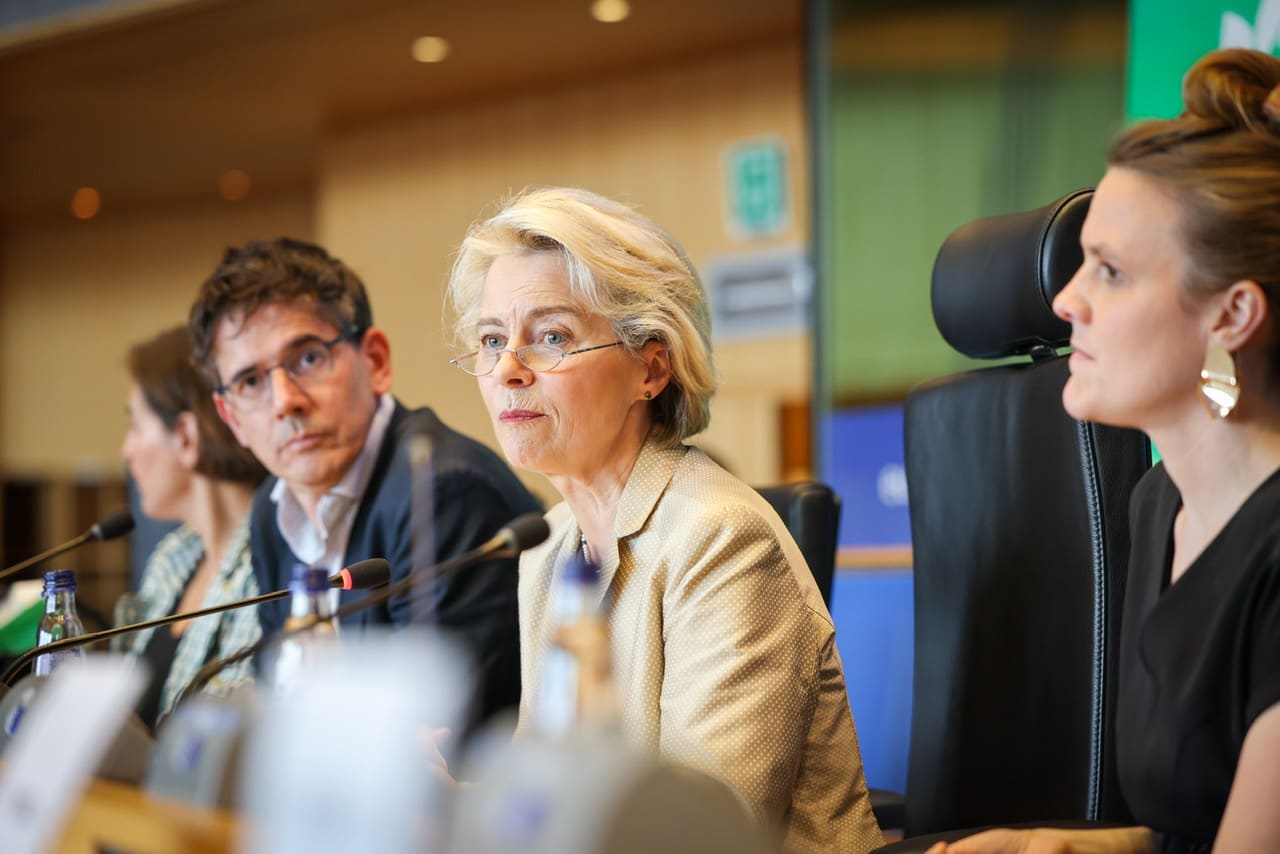
In Strasbourg, EU politicians from three political groups—the European Conservatives and Reformists (ECR), Identity and Democracy (ID), and the 'European Patriots'—have joined forces to submit a motion of no confidence. According to multiple sources, they have gathered the required 72 signatures for this.
The trigger is the so-called “Pfizergate.” At that time, Commission President Von der Leyen communicated personally with Pfizer CEO Albert Bourla about the purchase of billions of euros worth of coronavirus vaccines. Part of this communication took place via text messages, but these messages have never been made public. A European court recently ruled that VDL (Von der Leyen) violated her transparency obligations by this.
Von der Leyen has so far refused to comment on the content of the text messages or on her personal involvement in the negotiations with Pfizer. She defends herself by arguing that these were private messages, but this defense does not convince many Members of the European Parliament.
According to several MEPs, Von der Leyen is undermining trust in European institutions through her persistent refusal to release the messages. They say transparency is vital, especially regarding such expensive and impactful decisions. However, opinions in Parliament are divided on whether this is reason enough to send the entire Commission home.
The vote on the motion is expected this week during the full session in Strasbourg. Even if the vote proceeds, it is unlikely that the motion will gain a majority. The large centrist groups, such as the European People's Party (EPP) and the Social Democrats, despite internal criticism, continue to support Von der Leyen.
The motion of confidence comes at a delicate moment because Von der Leyen is currently strongly criticized over another issue, on which left-wing and Green EU politicians do threaten to withdraw confidence in the entire Commission (VDL2). This concerns the weakening or cancellation of Green Deal laws from the previous Commission (VDL1), particularly regarding the potential repeal of the anti-greenwash directive.
A vote of confidence this week could weaken her position, even if the motion fails. The entire issue fuels the broader debate about power, responsibility, and oversight within EU institutions. For many, the vote is seen as a political test: how far-reaching is the dissatisfaction with Von der Leyen's leadership? Consequently, the mistrust surrounding Von der Leyen is politically impossible to ignore.