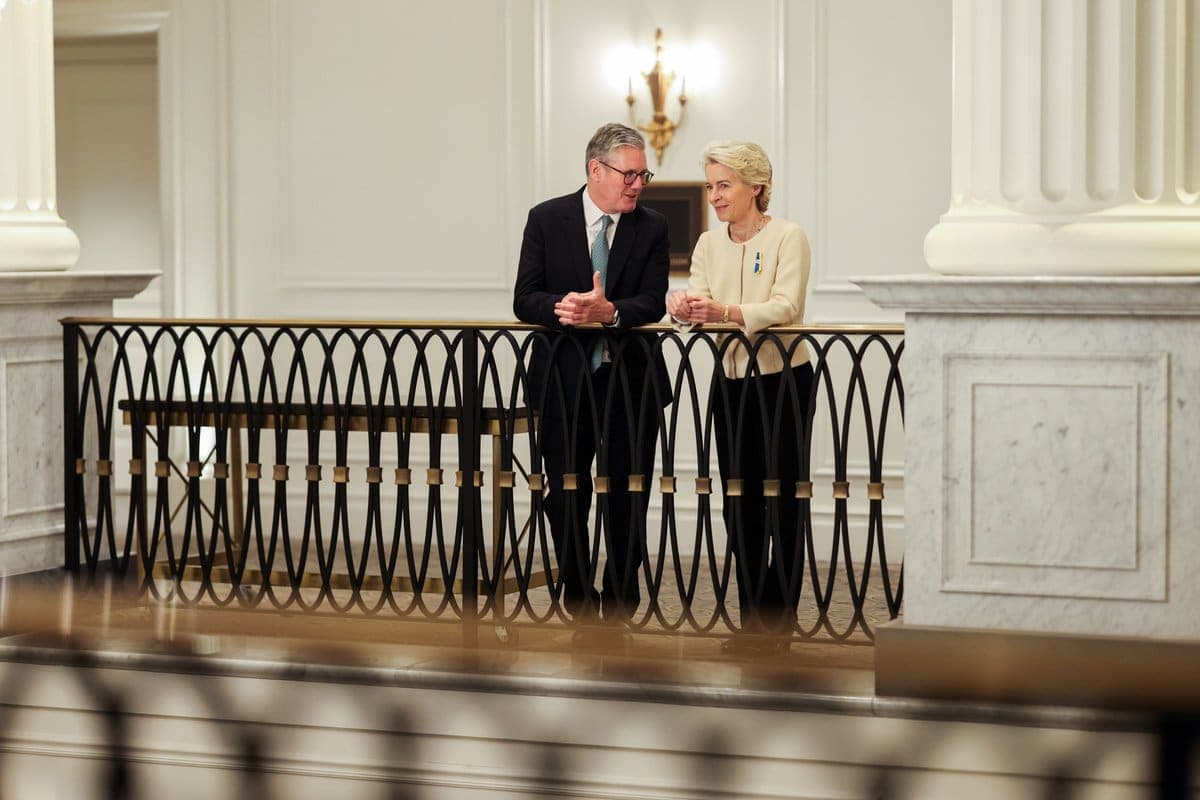
His Labour government wants to establish closer cooperation with Europe, to the concern of Eurosceptic opponents.
The meeting marks an important moment in the relationship between London and Brussels. Since Brexit, ties have cooled, but the new British government is now showing willingness to collaborate again in various fields. According to Starmer, this will benefit employment, lower bills, and improved border controls for Great Britain.
Both parties want to pragmatically negotiate a range of topics, such as defense cooperation, youth exchanges, fisheries, and trade rules. According to multiple sources, they hope for a mutually beneficial relationship without a direct return to EU membership or full integration into the internal market.
An increasing concern is the possibility of U.S. import tariffs, which could economically affect both the United Kingdom and the EU. London and Brussels feel compelled to jointly develop a strategy to prevent or manage trade conflicts with Washington.
At the same time, the Russian war in Ukraine provides another important motive for closer cooperation. The military threat and the variable U.S. stance within NATO put pressure on the European defense structure. Both the EU and Great Britain want to better coordinate their defense efforts without undermining NATO as an organization.
The British government is considering, among other things, a security treaty with the EU, while retaining autonomy from NATO obligations. This primarily concerns collaboration in cybersecurity, intelligence sharing, and addressing cross-border threats.
British and European environmental organizations are urging more joint action on climate and environmental policies. They call for harmonized measures that tackle cross-border environmental problems. Although this topic is less prominent on the political agenda, it remains a priority for civil society organizations.
The call for better economic cooperation also comes from the agricultural sector. Various sources report ongoing negotiations on easing food inspections at the borders. This would represent an important relief, particularly for British exporters of agricultural products.
Nevertheless, political resistance persists. Some British commentators see Starmer’s new course as a stealth route back to EU rules. According to them, British sovereignty will again be under pressure. The government denies this but acknowledges that it concerns “close cooperation” with clear agreements, not reentry.