British minister Michael Gove and European Commission Vice President Maros Sefcovic will discuss the disrupted supply of shops in Northern Ireland next week in London.
Since the Brexit came into effect, the British province of Northern Ireland has had a special status regarding customs and taxes. This is because Northern Ireland, unlike the rest of the United Kingdom, has remained within the European single market for goods.
In the Brexit agreement with the EU, it was agreed that certain products entering Northern Ireland from Great Britain must be inspected upon entry. As a result, deliveries of food and groceries from England to Northern Ireland are subject to (European) customs inspections, causing delays.
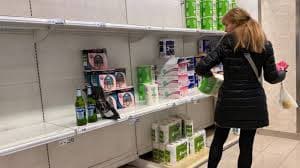
Last month, when the adverse effects of this new trade border became visible due to empty shelves in some Northern Irish shops, local communities there began to stir. British unity is sacred to Northern Irish unionists. Now that the practical consequences of Brexit are visible in England and Northern Ireland, dissatisfaction is escalating.
Protests against customs controls between two British territories have led to conflicts with European inspectors, who have since suspended their activities on the advice of their EU superiors in Brussels. It is unclear whether this important Brexit agreement will be revoked as a result.
British Prime Minister Johnson assured the people of Northern Ireland that he would ‘do everything’ to maintain the unity of the United Kingdom and to keep trade flows across the Irish Sea as smooth as possible.
A letter from Gove to Sefcovic reveals that London initially aims to extend the current transitional measures until 2023. Reportedly, the British also want to agree with the EU on a better customs arrangement for the transport of pets, steel quotas, and medicine supplies.