

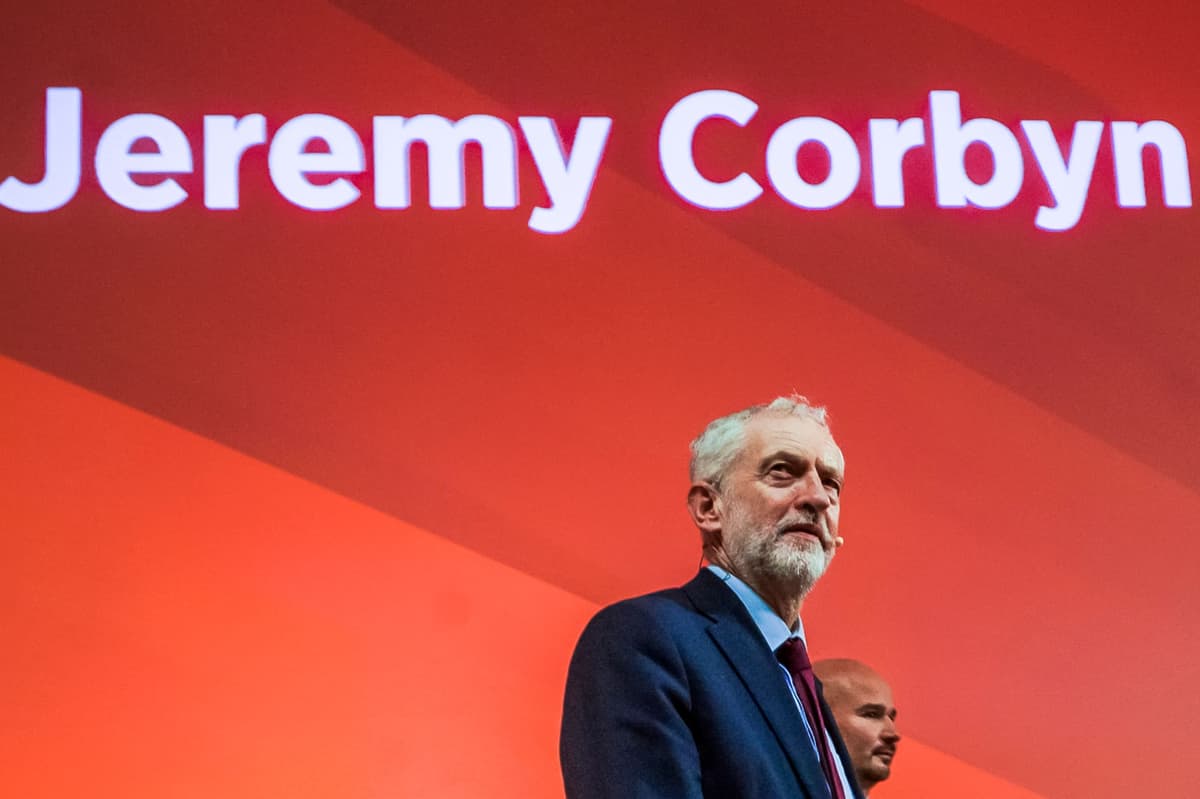
British Prime Minister Boris Johnson and opposition leader Jeremy Corbyn held their second and, for now, final TV debate on BBC television ahead of the parliamentary elections on Thursday, December 12. The debate, combined with audience questions, was more factual and substantive than their first debate. Yet again, the TV debate appears not to have shifted voter preferences.
Corbyn said he had obtained a confidential government report. It reportedly shows that Johnson’s Brexit deal with the EU has much greater consequences for Northern Ireland than the government claims. Johnson denies this, but no longer denies the existence of the report.
The fifteen-page report reveals that there will indeed be a customs border in the Irish Sea between the United Kingdom and Northern Ireland, and that the government cannot rule out extensive checks on goods traffic between Northern Ireland and the rest of the United Kingdom. This contradicts the Prime Minister’s earlier assertion that there would be no border whatsoever in the Irish Sea.
Promotion
Late last month, Corbyn also released hundreds of pages of documents about trade negotiations between Johnson’s government and the United States. The outcome could mean that the British National Health Service (NHS) will have to pay more for medicines.
The Conservative Party still enjoys support from 43 percent of voters in a recent poll. The opposition Labour Party remained steady at 34 percent, and the Liberal Democrats also held steady at 13 percent. If these numbers hold, the Conservatives would secure a majority in the House of Commons; this majority would only be in jeopardy if the gap between the two frontrunners is six percent or less.
The respected market research firm YouGov will release the results of a final poll on Tuesday evening, together with SkyNews and The Times. Analysts expect no major shifts for the Conservatives: they have already attracted the maximum number of ‘moderate’ Conservative voters previously held by Nigel Farage’s radical anti-European Brexit party.
Some analysts say there may still be shifts within Labour’s support. With his own cautious Brexit stance, Corbyn has already lost some traditional Labour voters who are anti-European to the Conservatives, but he might lose his pro-European base to the Liberal Democrats, SNP, or The Greens. However, it is also possible that moderate wavering voters from the LibDems, SNP, and Greens might switch to Labour.
Many commentators also point out that Johnson and Corbyn, with their election manifestos, do not attract voters but instead scare them off with their radical and stubborn stances. They are said to be hindering their own parties with their personalities. Speculation is already underway about which leader might resign after the December 12 results.
Prime Minister Johnson refuses to be interviewed on television by BBC’s top interviewer Andrew Neil. The other party leaders have all been interviewed by Neil in recent weeks. Neil’s interviews are very well-prepared, and politicians cannot get away with excuses or jokes. He also precisely highlights the weak points of an election manifesto or candidate.
Johnson denies that he is trying to avoid criticism. It is unprecedented for a party leader not to agree to a prime time interview on the BBC. Interviews with party leaders have for decades been an essential part of how the BBC covers elections in prime time. On Thursday, Boris Johnson also made it clear that he does not have time for an interview with the commercial British broadcaster ITV. There, too, he is the only party leader refusing to be interviewed on the program Tonight.