

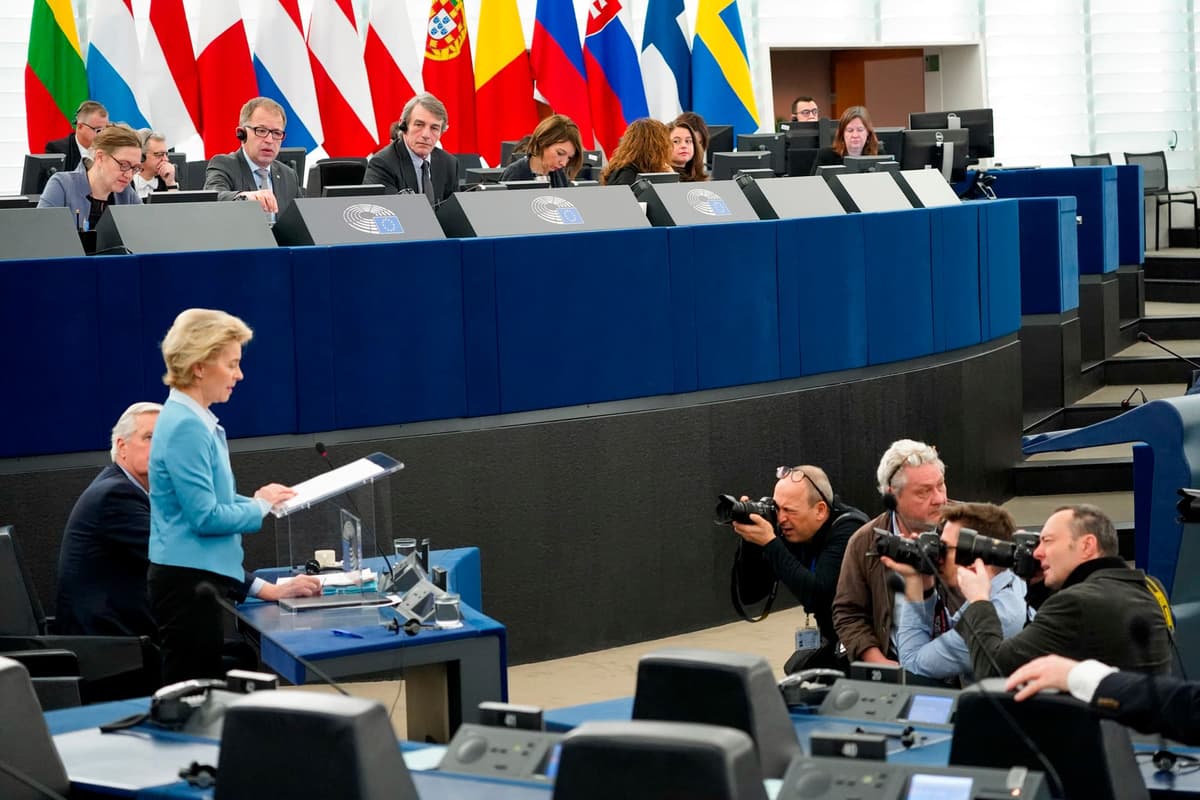
A reconstruction fund, established by the EU for the recovery after the corona crisis, must amount to some 1,500 billion euros. Brussels intends to raise this amount from the financial markets by issuing joint loans of the EU countries.
In an impromptu video debate with Von der Leyen and EU President Charles Michel, Members of the European Parliament called for more coordinated EU action to protect citizens and support the economy. They also agreed that the EU could have acted more decisively and faster in this crisis but pointed out that solidarity within the EU now seems to be recovering.
Von der Leyen noted that the economic outlook for the EU countries looks significantly worse than just a few weeks ago. Whereas Brussels considered a recovery package of a few tens of billions last month, now 1,500 billion euros are needed. It is no longer only about medical aid and health costs for some EU countries but also about the recovery of collapsed economies of multiple EU countries. The money needed for this must be raised collectively by the EU countries.
Promotion
Von der Leyen said that the European Commission will come forward with proposals for a revision of the 2021-2027 multiannual budget by the end of this month. She spoke about the necessity of a new Marshall Plan, referring to the program that contributed to the reconstruction of the economies of the European countries after World War II.
Such a radical financing construction resembles eurobonds, which the Netherlands and Germany opposed vehemently before. But after the new IMF forecasts of an impending economic contraction between 7.5 percent and 10 percent, it is becoming increasingly clear that the EU must erase the budgets set so far and recalculate them. Therefore, a review is taking place of which initiatives have priority and which are less essential and can therefore be postponed.
From Brussels, they emphasize that a total revision of the EU plans must be part of a new European budget. And if an economic recession is indeed coming that threatens to be greater than that of the 1930s, then more new money will have to go to the EU budgets in the coming years and existing items will have to be cut more.
And Von der Leyen is in a hurry, because actually the first year (2019) of this term was already a lost year, and the second year (2020) was almost lost due to disagreements over higher contributions or cuts. As a result of the revision of all EU plans, the presentation of the new European Climate Plan Green Deal and the announced revision of the Common Agricultural Policy (CAP) will have to be postponed until autumn.
But the ecological and digital transition that Von der Leyen and Commissioner Frans Timmermans aim for maintain their priority and must continue as planned, Von der Leyen insists. The Green Deal is specifically central to this: these plans therefore remain high on the Commission’s list and, according to Von der Leyen, are not up for debate.
As a consequence of so much uncertainty, Germany’s rotating EU presidency (second half of 2020) threatens to become mainly a matter of uncertainties, improvisation, and trial-and-error. A first German working document on the Berlin presidency (‘The European farewell of Angela Merkel’) reportedly still contains many blank pages.