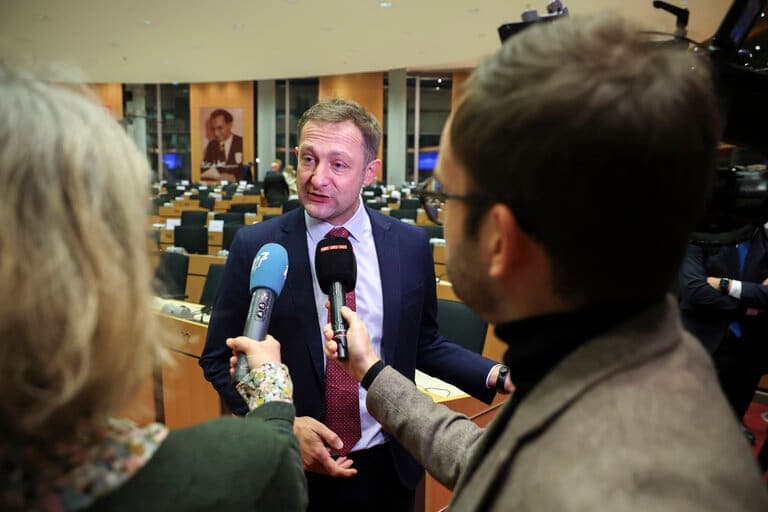
Agriculture Commissioner Hansen emphasizes that the EU will continue to support Ukraine, but it is also necessary to consider the European agricultural sector. In the interview with AFP, he said he expects the European Commission to be less lenient in allowing unlimited imports during the next decision round. "We are seeking a balance," Hansen said.
Since the Russian invasion in 2022, the European Union has supported Ukraine in several ways. One of these was the removal of import duties and quotas on Ukrainian agricultural products. This was intended to keep the country economically afloat and to facilitate the export of grain, vegetables, fruit, and meat to the EU.
This temporary measure quickly led to tensions within the EU. Farmers from several EU countries warned that Ukrainian products were entering the European market at much lower prices. They spoke of "subsidized competition" and feared they would suffer from the opening of the borders.
Particularly in France, Poland, and Romania, this led to protests. French poultry farmers complained about the import of Ukrainian chicken that is cheaper than they can produce. In Poland, there was unrest over the influx of Ukrainian grain, which put pressure on local prices and occupied storage capacity. Similar criticism was heard in Hungary and Slovakia.
Although the agreements were originally valid for one year, they have since been extended multiple times. At the same time, some adjustments have been made over the past year. Since last autumn, renewed restrictions apply to the import of certain products such as sugar, poultry, and eggs.
Within the EU, the debate over support measures for Ukraine has intensified. Some countries are pushing for an extension of the trade exemptions, while others demand stricter protection of the internal market. The European Commission must make decisions in early June, just before the European Parliament's summer recess.
In Ukraine, there is concern about the upcoming European decisions. Export to the EU is crucial for the country’s economic survival. However, some analysts point out that too great a dependence on the EU market also involves risks for Kyiv, especially if political support decreases or conditions change.