

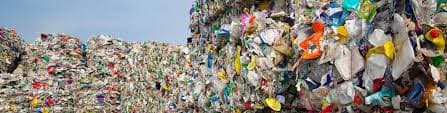
While traditional destinations for waste exports such as China are closing their doors to waste from EU countries, the wealthier western EU countries are turning to those in the east. The result is a huge increase in pollution and environmental degradation in Central and Eastern Europe.
The European Commission is currently working, as part of the Green Deal, on revising the regulations for waste transport, which date back to 2006. The revision aims to make recycling within the EU easier and reduce the transport and shipping of waste to countries outside the EU.
Experts fear that stricter controls on transports to recipients outside the EU could lead to an increase in waste transport to other member states within the EU.
Promotion
“The EU generates too much waste and cannot handle it. That is why this waste is shipped to countries with lower wages and weaker environmental protection, such as Turkey, Malaysia, or Indonesia,” said Pierre Condamine of Zero Waste Europe, speaking to Emerging Europe.
According to the European Commission, the EU alone exported 1.5 million tons of plastic waste in 2019, mainly to Turkey, Malaysia, Indonesia, Vietnam, India, and China. But as those exports are now restricted, there are fears of waste being diverted to lower-wage countries such as Poland, Bulgaria, or Romania. Waste flows that previously went to Southeast Asia then head to Central and Eastern Europe.
Since this year, three new restrictions apply to the export of waste outside the EU, especially for certain types of plastic. As a result, several EU members in the CEE region have seen an increase in the import of litter.
Although this is technically legal, it has been shown that transports labelled as ‘recyclable material’ actually contain non-reusable waste – a service for which some companies are willing to pay heavily and sometimes cooperate with organized crime groups.
The problem is particularly acute in Romania. The border police in the Romanian port city of Constanţa (on the Black Sea) found several containers in April loaded with illegally imported waste. The shipment documentation stated it contained only recyclable plastic, but it also contained wood, metal, and hazardous waste such as batteries. The containers were found to have been stacked in Germany by a Belgian company.
Similarly, Poland, which after Turkey and Malaysia receives the third largest amount of waste from the United Kingdom, has also suffered from an increase in transports within the EU.
While Austria, Germany, and Italy are all accused of not doing enough against illegal exports to Poland, Germany was the origin of 70 percent of the waste that went to Poland in 2019.
Also in 2019, police in Krakow, Katowice, and Czestochowa arrested 15 people accused of being part of the “waste mafia” after 2,452 tons of illegally stored waste was found in and around the three cities. They had charged two million euros for their services, demonstrating how lucrative the waste industry can be.