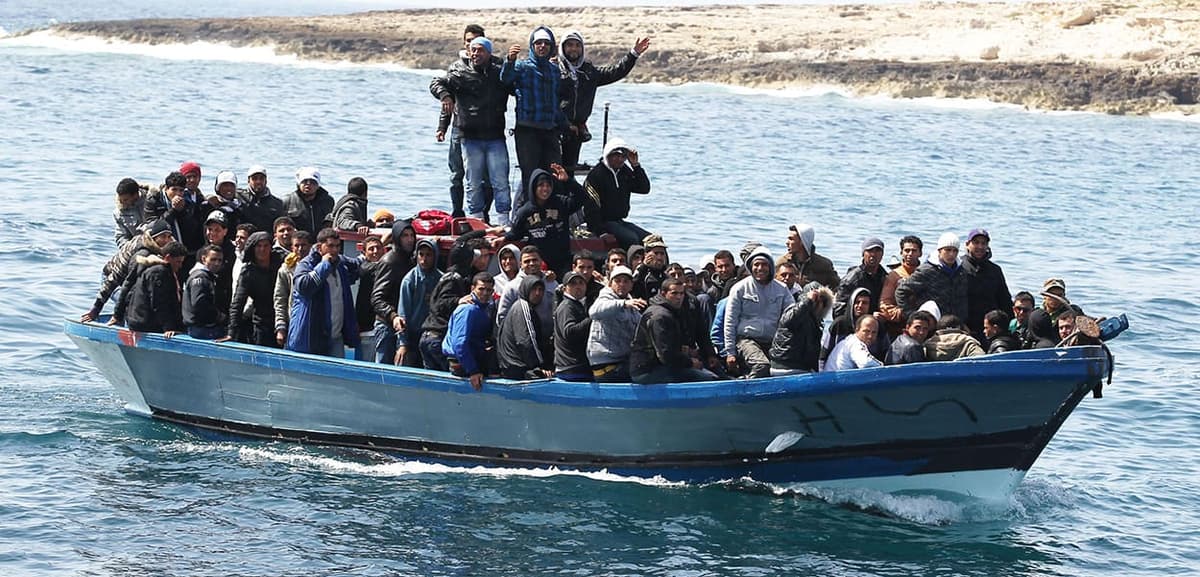
The calculations presented in Brussels cover the period from July 2024 through June 2025. They show that four southern EU countries – Greece, Cyprus, Italy, and Spain – currently host the largest numbers of immigrants.
In addition, twelve other countries, including Belgium, the Netherlands, Germany, France, Ireland, and Poland, are designated as risk countries. This means they are already facing increasing pressure on their reception systems or the threat of new inflows.
Six countries, mainly in the eastern EU, temporarily have to contribute less to the solidarity fund because they have experienced prolonged migration pressure in recent years. According to the Commission, their situation will be reassessed regularly.
Countries under significant pressure will also receive priority for the allocation of European subsidies and support programs. These are intended to help improve reception facilities, border surveillance, and the return of migrants.
Several EU countries have indicated in recent years that they do not intend to take in more refugees themselves or contribute financially. Therefore, work is also underway on establishing so-called 'return hubs'; a kind of prison or reception camp in countries outside the EU.
According to the European Commission, the number of illegal border crossings fell by approximately 35 percent last year. At the same time, accommodating Ukrainian refugees and the arrival of undocumented migrants remains a challenge.
The report clarifies how the new migration pact could work in practice. EU countries are given the choice to accept asylum seekers or to contribute financially to reception in other countries. That mechanism, the so-called solidarity pool, forms the core of the new European approach. It is intended to prevent EU countries at the external borders, such as Greece or Italy, from being left on their own.
To strengthen border surveillance in the Mediterranean region, the Commission also announced a tender worth 250 million euros for the purchase of drones and anti-drone equipment. This is meant to help EU countries at the European external borders respond to new forms of border pressure.
With this first numerical overview, the European Commission wants to show that solidarity within the Union is not just a political concept but also something that can be concretely calculated. The figures thus form the basis for a joint European approach to migration.