

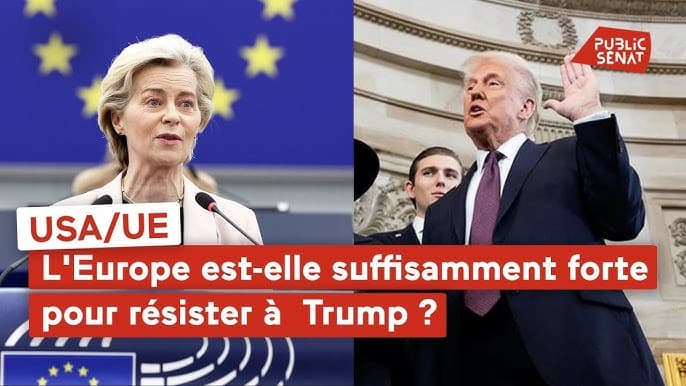
The European Commission says that retaliatory measures are prepared if the United States decides to impose tariffs on European goods. The US has already introduced additional tariffs against China and Canada and is now considering doing the same for the EU. These measures would take effect on August 1, although they were previously announced and postponed.
During the Scotland summit, Commission President Ursula von der Leyen will meet with US President Donald Trump. Both hope to formally reach a trade agreement, but key points of contention remain. The talks are regarded as a decisive moment in the economic relationship between the two sides, which has been under pressure since prior American threats of additional import tariffs.
The EU has announced that it will not accept unilateral American sanctions. European countermeasures mainly target sectors that are politically sensitive in the US, such as agricultural products and industrial goods. With this, Brussels is attempting to exert pressure to reach a more balanced agreement.
Promotion
Parallel to the talks with the US, the EU also intensified trade discussions with China last week. During a summit in Beijing, Von der Leyen and European Council President Antonio Costas made clear that China’s trade surplus with the EU must decrease. The EU exports significantly less to China than it imports.
According to multiple participants, the consultation with Chinese President Xi Jinping went tough. The EU has long complained about market access, distortion of competition due to Chinese state support, and technological dependency. Both parties acknowledge the necessity of cooperation but remain divided on structural trade issues.
The European Union aims to strengthen its position as a global economic player. To that end, it wants to stimulate its domestic business sector, support technological innovation, and expand trade agreements with like-minded partners. At the same time, calls are growing to reduce dependence on imports from non-EU countries.
For companies on both sides of the Atlantic Ocean, much depends on the outcome of this weekend. The threat of import tariffs is causing uncertainty in the markets. Producers and exporters are preparing for a scenario in which trade flows are once again disrupted by political decision-making.