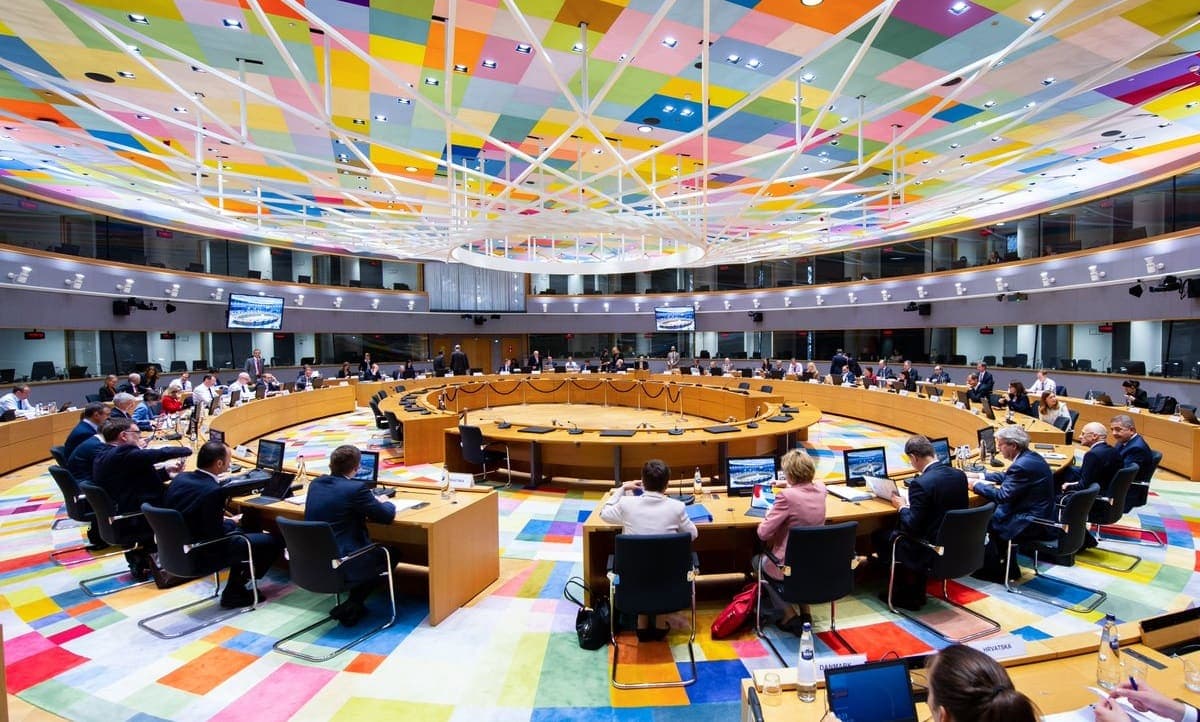
In European capitals, there is a growing conviction that the European Union must strengthen its position in the world. The international environment is described as harsher and more competitive, with major powers increasingly asserting their own interests.
A central theme is Europe's competitiveness. Industry, technology, and production capacity are cited as crucial pillars. Europe must prevent becoming economically dependent and falling behind other economic superpowers.
European Commissioner Séjourne believes that EU countries must now seriously commit to a joint European manufacturing industry. The French EU Commissioner's plea comes on the eve of a European summit focusing on strengthening the EU’s autonomous position between economic superpowers like the US and China.
The call for accelerated cooperation coincides with an urgent appeal by former EU President Draghi, last weekend in several major European newspapers. The Italian had already initiated a push one and a half years ago to the new European Commission led by Ursula von der Leyen to strengthen the position of European companies.
Also, faction leader Manfred Weber of the largest political party in European politics, the EPP, publicly advocated at the end of last month for a more integrated European policy, a call that nearly amounted to an appeal for an EU federation. He believes that, if necessary, the European NATO countries should become their own nuclear power, possibly by using British and French nuclear weapons.
The accelerated merging of large European industrial companies, including the arms industry, is partly a response to the Russian war against Ukraine and the tariff war that the United States has launched against the rest of the world.
Defense also plays a prominent role in the debate. The necessity to cooperate better and strengthen European arms production is widely shared, partly against the backdrop of international conflicts and security risks on the EU’s eastern front.
At the same time, the discussion (once again) flares up about how the European Union should be governed. This has been a topic of much talk for years but little decision-making. Proposals to streamline and make decision-making more effective still face questions about feasibility, and there is always a prime minister or minister who hits the brakes. Critics say Brussels apparently has learned nothing from Brexit.
The unanimity principle in foreign policy is regarded as a significant bottleneck in this context. More and more EU politicians point out that this principle can block decision-making and prevent Europe from acting swiftly and united. Especially in recent years, it has increasingly become apparent that in such situations the EU is presented with fait accompli by other major powers.