

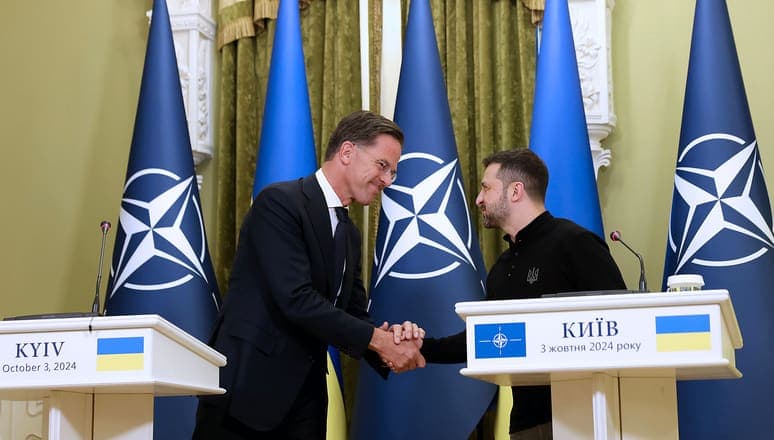
In an interview with an Australian broadcaster, Rutte said that a peace agreement might entail Russia maintaining control over parts of the eastern Ukrainian provinces and Crimea. According to him, this would mean a “frozen ceasefire,” where the situation on the ground is accepted but not formally recognized.
These statements come ahead of European leaders and Ukrainian President Zelensky holding a joint video conference. Among other things, they will discuss how to present their stance to the United States and Russia.
Prior to a scheduled meeting in Alaska between U.S. President Trump and Russian President Putin, European leaders collectively called for no agreements to be made that assign Ukrainian territory to Russia. The declaration emphasizes that lasting peace is only possible with full sovereignty for Ukraine.
Promotion
Hungary did not sign this joint declaration. Prime Minister Orban, known within the EU and NATO as pro-Russian, distanced himself from it. His refusal led to divisions within the European camp just before the critical talks.
The European appeal to Trump also included the message that the United States must continue supporting Ukraine, both militarily and economically. It was warned that a too-quick peace without guarantees for Ukrainian security would only temporarily freeze the conflict.
The meeting in Alaska is seen as an important test for future relations between the U.S., Russia, and Europe. The timing of Rutte’s remarks underlines that the Russian war in Ukraine is entering a new diplomatic phase. While fighting continues on the battlefield, international meetings are searching for a political way out—with the risk that the outcome may be less favorable for Ukraine than hoped.