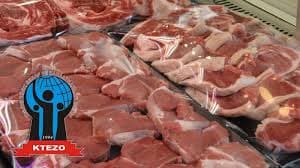
The decision to import meat from the Netherlands comes after months of reports about Turkish Cypriots trying to smuggle meat from the independent south of the island to the north. In March, the Turkish-Cypriot police found and confiscated nearly two tons of beef in supermarkets in the north of the divided island.
Meat imported from the Netherlands will be sold at butcher shops in the north, where frozen lamb will cost €11.42 per kilogram, and frozen packaged ground beef will be sold for €8.56 per kilogram. Prime Minister Ustel said that offers for meat supply had been received from Spain, Romania, and the Netherlands, and they chose the Dutch bid.
Meat prices in the north are generally higher than those in the Republic of Cyprus – a fact that encourages residents to buy meat products south of the Green Line and smuggle them illegally back into the north.
The northern authorities are aware of possible reactions from the northern butchers and said that "no step back will be taken." The butchers see the government-organized meat import from the Netherlands as a disruption and threat to their market.
The first attempt to address this issue was in April with the implementation of price controls on lamb. The pro-Turkish administration declared that lamb could not be sold for more than €15.89 per kilogram, with butchers trying to sell their meat at higher prices nonetheless, leading to fines.
Butchers in the north circumvented that law by introducing a "service fee" on top of the selling price of lamb. The fee typically varies between 10 and 15 percent of the sale price.
The northern Turkish-Cypriot republic is not recognized by any country (other than Turkey) and falls under international embargo rules. As a result, the area relies almost entirely on Turkish financial support, depends on transit via Turkey for imports and exports, and has hardly a functioning economy.
Partly because of this, meat prices in the southern independent neighboring republic of Cyprus are significantly cheaper, leading to increased smuggling across the 'green line.' This international dividing line is monitored by UN observers.