

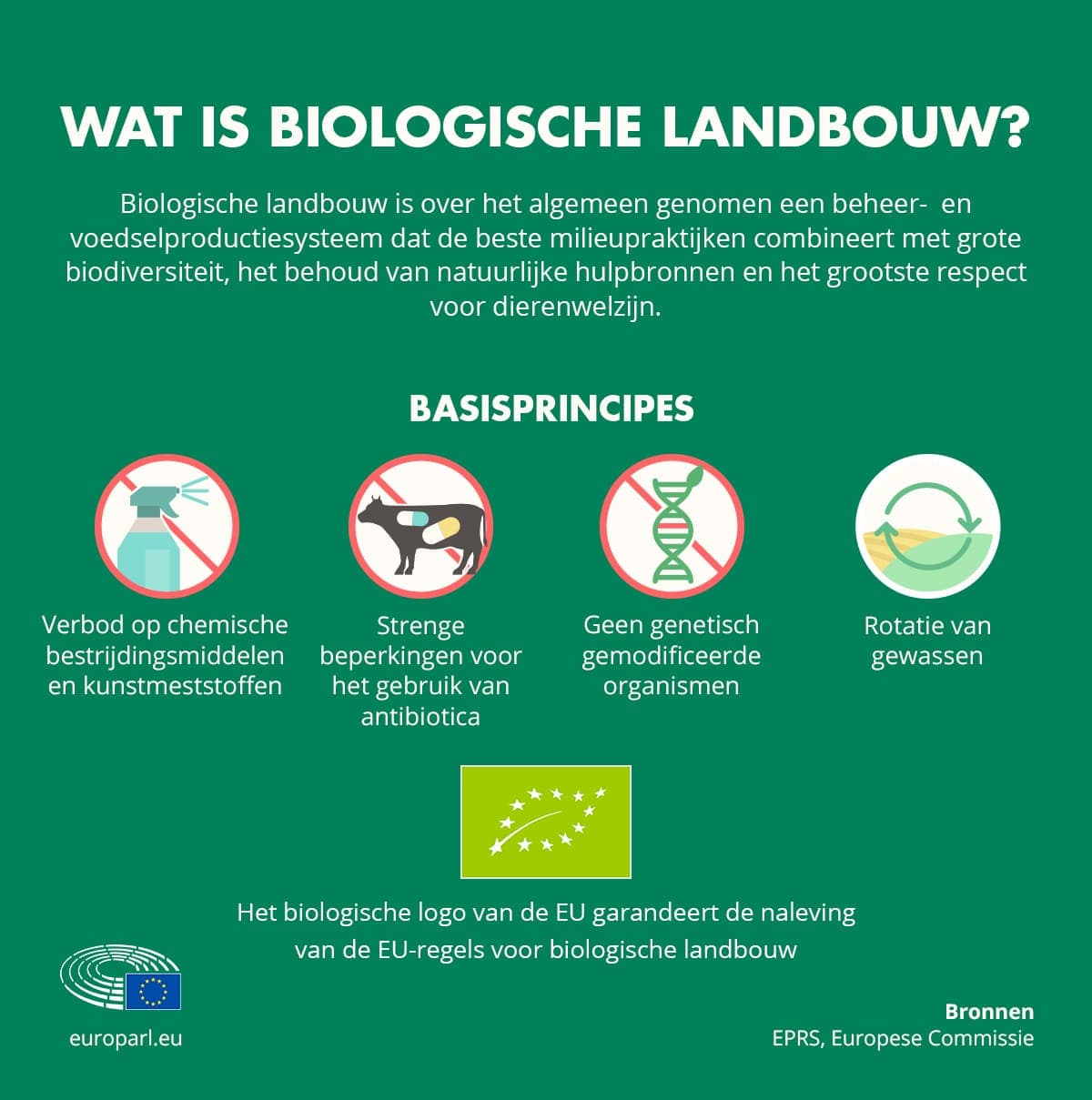
The organic market in the European Union continues to grow. In 2020, turnover increased by 15 percent to 44.8 billion euros. The organic area expanded by 0.7 million hectares (5.3 percent), according to the statistical yearbook ‘The World of Organic Agriculture’.
The growth was slower than the previous year but higher than about ten years ago. Over the past ten years, retail sales in the European Union have more than doubled. In the EU, 14.9 million hectares were organically farmed in 2020.
France is the new leader with almost 2.5 million hectares, followed by Spain (2.4 million hectares) and Italy (2.1 million hectares). In 2020, 307,000 hectares of organic land were added in France, 102,000 hectares in Italy, and 88,000 hectares in Germany.
Promotion
The organic area accounted for 9.2 percent of the total agricultural land. In the farm-to-fork food strategy, the European Union aims to expand this to a quarter of agricultural land. Fifteen European countries reported that at least 10 percent of their agricultural land is already farmed organically.
There were nearly 350,000 organic producers in the European Union. Italy had the largest number of organic processors (almost 23,000), while Germany had the most importers (over 1,900). In 2020, the non-EU country Switzerland had the highest organic consumption per capita in Europe and worldwide.
The EU was the second largest internal market for organic products after the United States, which totaled 49.5 billion euros. Germany is the European country with the largest organic market, valued at 15 billion euros.