

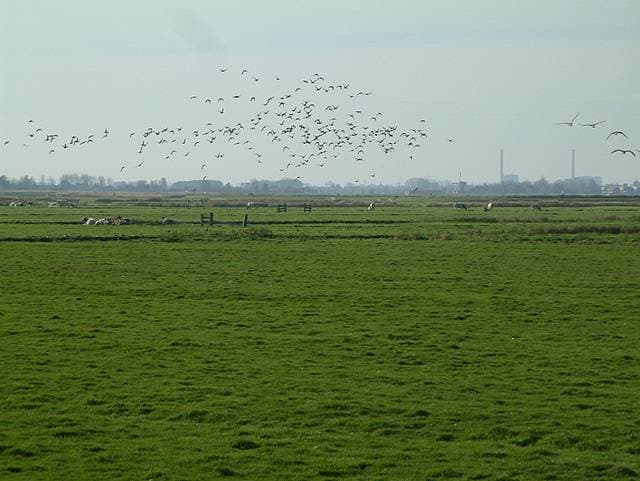
Over the past forty years, one in six breeding birds in Europe has disappeared. Since 1980, approximately 600 million birds have been lost, with the house sparrow leading, followed by the yellow wagtail, starling, and skylark.
A large part of the decline occurred in the 1980s and 1990s but continues to this day, according to recent research.
Scientists from the Royal Society for the Protection of Birds, BirdLife International, and the Czech Institute of Ornithology examined 378 of the 445 European breeding bird species. From 1980 to 2017, the research estimates that about 900 million birds were lost, but there was also an increase of 340 million in certain species, resulting in an estimated loss between 560 million and 620 million.
Promotion
The study was compiled using data from reports submitted by EU member states to the European Commission under the EU Birds Directive. The greatest decline occurred among birds associated with farmland and grassland.
The house sparrow population shrank by 247 million, the yellow wagtail by 97 million, the starling population declined by 60%, approximately 75 million, and skylarks decreased by 68 million.
According to the study, these sharply reduced numbers are mainly due to changes in agricultural policy and management. However, the reason why the house sparrow is also less common in cities remains unclear. This may be related to food shortages, the spread of diseases, or the effects of air pollution.
Thanks to various measures to protect bird species, the rate of decline has slowed over the past decade. This has led to an increase in the numbers of seven species of birds of prey.