

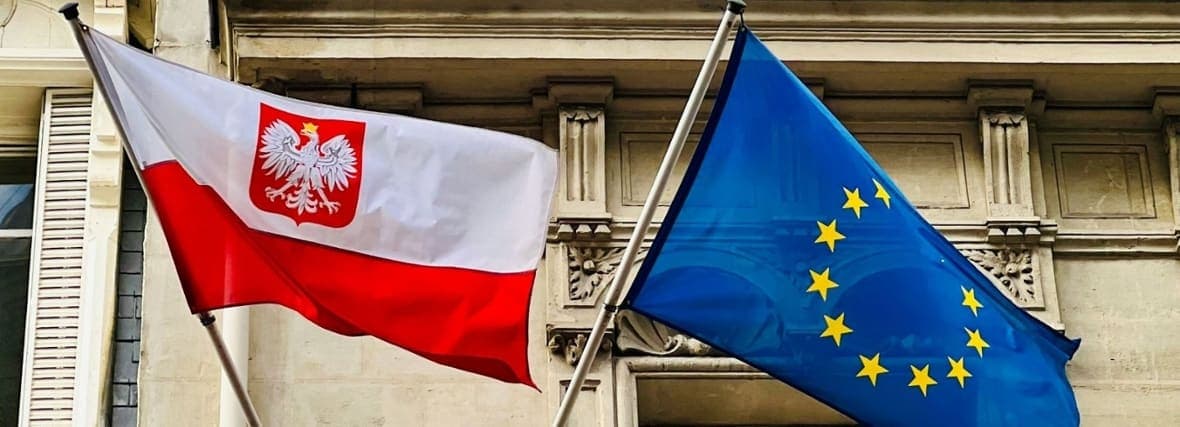
The contest between the liberal, pro-European mayor of Warsaw, Rafał Trzaskowski, and the nationalist-conservative Karol Nawrocki is so close that polls do not indicate a clear winner.
In the first round, Trzaskowski received 31.1% of the votes, while Nawrocki got 29.5%. The third place went to libertarian candidate Sławomir Mentzen, who gathered nearly 15% of the votes. His supporters could be decisive in the second round.
Mentzen has presented an eight-point plan, which includes opposition to tax increases and against Ukraine’s EU membership. Nawrocki has endorsed this plan in an attempt to gain the support of Mentzen’s base. Trzaskowski has expressed selective opinions on some of these points.
Promotion
Nawrocki, backed by the opposition Law and Justice party (PiS), advocates for preserving traditional values and a critical stance towards the EU. The president in Poland holds limited executive power but can veto legislation and influence security policy.
Trzaskowski, supported by the ruling Civic Coalition of Prime Minister Donald Tusk, stands for a pro-European course and reforms within the rule of law. Among young voters there is growing dissatisfaction with the political establishment. This demographic group could play a crucial role in the second round, as their voting behavior is difficult to predict.
In rural areas, Nawrocki has significantly more support, particularly among farmers and agricultural workers. In the first round he received 38.1% of the votes there, compared to 21.7% for Trzaskowski. This gap highlights the division between urban and rural areas in Poland.
Internationally, Nawrocki has received support from figures like Hungarian Prime Minister Viktor Orbán and former US President Donald Trump. This backing underscores the geopolitical implications of the elections, especially regarding Poland's position within the EU and its relations with neighboring countries.
The elections are seen as a referendum on Poland’s future: a choice between further integration with the EU and maintaining national sovereignty. The outcome will affect not only domestic politics but also Poland’s role on the European stage.