With the major trade agreement, the European Union positions itself more prominently among the world’s leading economic powers. This agreement allows the EU to spread risks and expand its own export opportunities.
As a result, the EU becomes less dependent on trade arrangements with the United States, which under President Trump pursued a fluctuating and uncertain course.
Currently, Brussels is also working on a major trade agreement with Australia, while a free trade agreement with several South American countries is nearly finalized.
The agreement fits within a broader European strategy of risk diversification. The EU aims to reduce its reliance on a few major trading partners and is actively seeking more stable, long-term partnerships. The deal with India opens markets for approximately two billion people and marks a breakthrough after years of stagnation.
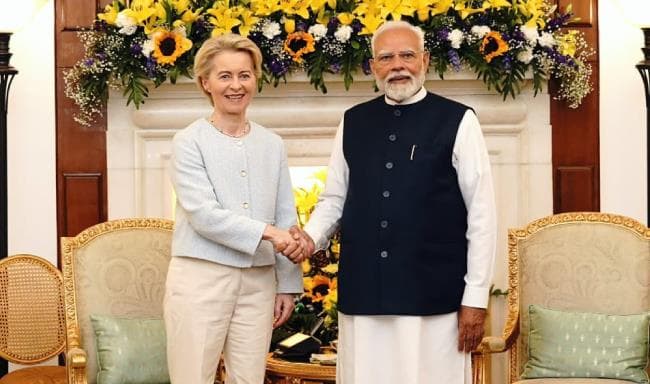
The agreement was celebrated last week in New Delhi by European and Indian leaders. They emphasized that the deal is not only economically important but also carries clear political significance in a changing world order.
The agreement provides for mutual market opening. India will reduce or eliminate import tariffs on a large portion of European exports, while the EU will do the same for virtually all Indian goods, measured by trade value.
Europe gains better access for sectors such as automobiles and alcoholic beverages. In turn, India obtains concessions in pharmaceuticals and services, along with commitments on further cooperation.
The agricultural sector plays a limited role in the agreement. Both parties chose to proceed cautiously here, partly to avoid political resistance that previously played a significant role in earlier trade agreements.
The agreement still needs to be further elaborated and implemented. There remains uncertainty regarding the exact effects on certain sectors, including steel and climate-related levies. These details will need to be addressed in follow-up negotiations.