

Dutch agricultural experts will assist Cuba in improving agricultural production on salinized farmland. Earlier this month, the Dutch organization The Salt Doctors conducted an initial study on several potential locations in Cuba. This was reported by the newsletter Agroberichtenbuitenland.nl.
The Salt Doctors emerged from the Zilt Proefbedrijf (Saline Trial Company) on Texel. Arjen de Vos is one of the individuals using his expertise from the trial company to initiate projects in countries such as Bangladesh, Tunisia, Egypt, and South Africa.
Dutch Agricultural Counselor Erik Plaisier is closely involved in seeking solutions for the salinization problems in Cuba. He is convinced that Cuban food production can be significantly increased with Dutch knowledge, materials, and technology.
Promotion
The hope is that the research mission will result within a few months in concrete agreements with Cuban authorities, such as the establishment of a pilot project. Contacts have already been established with representatives of the FAO and the EU.
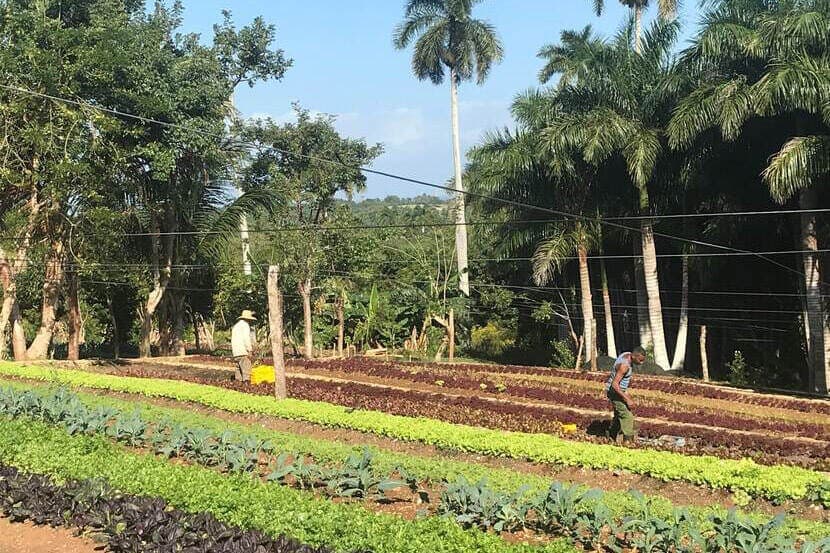
In Cuba, about 1 million hectares of farmland have already been heavily salinized, and possibly another 1 million hectares are at risk. Salinization in important agricultural regions south of Havana leads to lower yields of all crops, from potatoes to beets and from carrots to cabbage. "For Cuba, which imports a lot of food, this is therefore a huge problem."
De Vos said: "Potato yields in salinized areas are around 22 tons per hectare, while 30 to 35 tons is achievable if the right measures are taken. With salt-tolerant varieties and adapted cultivation techniques, production can increase significantly. With our experience on Texel and in many other countries, we can provide the right combination of measures and varieties."
Importing salt-tolerant seed and planting material requires cooperation from the Cuban government. De Vos is reasonably optimistic about this. "Employees of the Cuban Ministry of Agriculture accompanied the mission, they realize that measures are necessary and now know we can offer solutions."
Agricultural Counselor Plaisier expects few problems regarding the import of suitable planting material. This is for a pilot, and according to him, import regulations in Cuba are generally more flexible for this.