

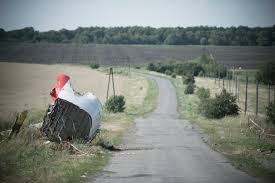
On Monday, the court case in the Netherlands begins against Russian and Ukrainian suspects accused of shooting down the Malaysian passenger plane MH17. Already, an international comparison makes clear that the tragedy was unavoidable. Such a comparison also shows that responsibility and questions of guilt could have been identified much earlier and much more easily.
In the past sixty years, there have been more than twenty cases worldwide where a passenger plane was shot down. Not all of these can be compared to MH17. Sometimes it was a prepared, deliberate targeted attack against a president, mediator, or UN chief (1961 Dag Hammarskjöld, 1994 presidents of Rwanda and Burundi). In about ten other cases, it was a targeted military action during a civil war or open conflict (twice in Rhodesia, twice in Angola, three times in Afghanistan, three times in Abkhazia).
There have also been cases where air defense forces conducting exercises didn't just practice but accidentally fired real missiles. This certainly happened in 1962 with a Russian Aeroflot plane over Siberia. Similarly, in 1980 over the Mediterranean Sea, an Italian passenger plane was shot down during a jet fighter exercise involving the United States, France, Italy, and Libya. It was only in 2013 that the Italians admitted a real missile had been used.
Promotion
The MH17 incident bears many similarities to at least ten cases in which, amid a threatening situation during a military conflict, local air defense apparently made a mistake. Instead of targeting an enemy military aircraft, missiles were fired at a civil passenger plane, with all the resulting tragedy. For example, in 1975 a Hungarian Malev passenger plane was shot down while approaching Beirut airport by one of the combatant parties in the Lebanese civil war.
Earlier this year, near Tehran, a Ukrainian passenger plane that had just taken off was shot down because Iranian air defense mistook it on their radar for an Iraqi attack, just hours after Iraq had launched missile strikes against an Iranian general. In the heat of battle, the Iranian air defense apparently made a wrong judgment.
The fact that the Russian air force does not hesitate to press the red button was already evident in 1978 and 1983, when Russian fighter jets shot down South Korean passenger planes at high altitude. According to Moscow, the South Korean pilots failed to comply with orders to change course.
In both cases, the passenger planes were flying through Alaska to and from the U.S., and according to Moscow had entered Russian airspace. In one case, Moscow maintained for ten years that the KAL007 was on a spy mission. Moscow also refused to hand over the recovered black boxes to international aviation investigators. In both cases, the planes ended up east of Murmansk in the Pacific Ocean.
In 1988, the crew of the American frigate USS Vincennes in the Persian Gulf on their radar mistook a taking-off Iranian passenger plane for an Iranian F14 jet fighter armed with surface-to-air missiles. At first, the U.S. blamed the Iranians entirely.
For a long time there were disagreements within the U.S. government about how to handle this incident. The Pentagon maintained for years that the Iranian air force had their fighters broadcast 'civilian' transponder codes. Ultimately, Iranian complaints against the U.S. were settled in 1996 by the International Criminal Court in The Hague, with compensation for the Iranian victims’ families and an implicit admission of guilt.
Based on materials already collected by the JIT investigators and a comparison with similar situations, it can be assumed in the case of MH17 that there was a combination of circumstances, with somewhat understandable but nonetheless dramatic consequences.
An armed conflict was ongoing in eastern Ukraine. Within a few days, multiple military aircraft and helicopters had been shot down. Ukrainian air defenders mainly monitored air traffic approaching from the east, while eastern rebels apparently kept watch on radar for incoming flights from the west.
At the tense and deadly Donbass front, a tense and fatigued corporal or sergeant apparently mistook the Malaysian MH17 approaching at high altitude for a threatening enemy aircraft, an alarm was raised, a commander gave or received permission, and a missile was fired. As has happened frequently before….