

The Conservative Party of British Prime Minister Boris Johnson is still heading for a (small) parliamentary majority in today’s elections. Experts say a majority of fewer than twenty seats is actually too little for a stable completion of Johnson’s Brexit plan.
Since Theresa May lost seats in the 2017 elections, the Conservatives have not had a majority. With the support of a Northern Irish faction, May and Johnson just stayed above the required 325 seats. But since the Northern Irish walked away, and about twenty 'rebellious' MPs were expelled this fall, Boris Johnson has at most the support of around 300 parliament members. If his party were to win the predicted 339 seats today, that would be a gain in seats.
That 339 is considerably less than the roughly 370 seats predicted by pollsters less than a month ago. At that time, the Conservatives stood at about 370. And it is also far from certain that Boris Johnson himself will be re-elected in his own constituency. If he fails, the Conservatives will have to use administrative tricks to get him into the House of Commons and enable him to become prime minister again. It has never happened before that a British prime minister was not re-elected.
Promotion
Moreover, the margins in about 70 of the 650 districts are so small that the outcome in those cannot really be predicted. Johnson is therefore by no means certain of a resounding victory. According to him, with too small a majority it will be an impossible task to push his Brexit deal through Parliament. Opposition party Labour would stall at 231 seats, which is 12 fewer than in 2017. The Scottish National Party (SNP) would grow by 6 seats to 41, and the Liberal Democrats would gain 15 seats.
Labour leader Jeremy Corbyn said the predictions are again far off. Corbyn points to voter research in the Putney district. It was a solid Conservative seat for many years, but the population voted in the 2016 Brexit referendum with 72 percent to remain in the EU. Now that district is almost certainly going to Labour, and Corbyn says similar shifts are occurring elsewhere in the country. He still does not rule out Labour winning the elections.
In addition, Labour could be helped by the fact that millions of voters say they still have not made a choice. These swinging voters can cause a shift in dozens of districts today at the ballot box. Both Tories and Labour have about half their voters choosing between party loyalty or EU loyalty. And in Scotland, between pro-UK or pro-EU.
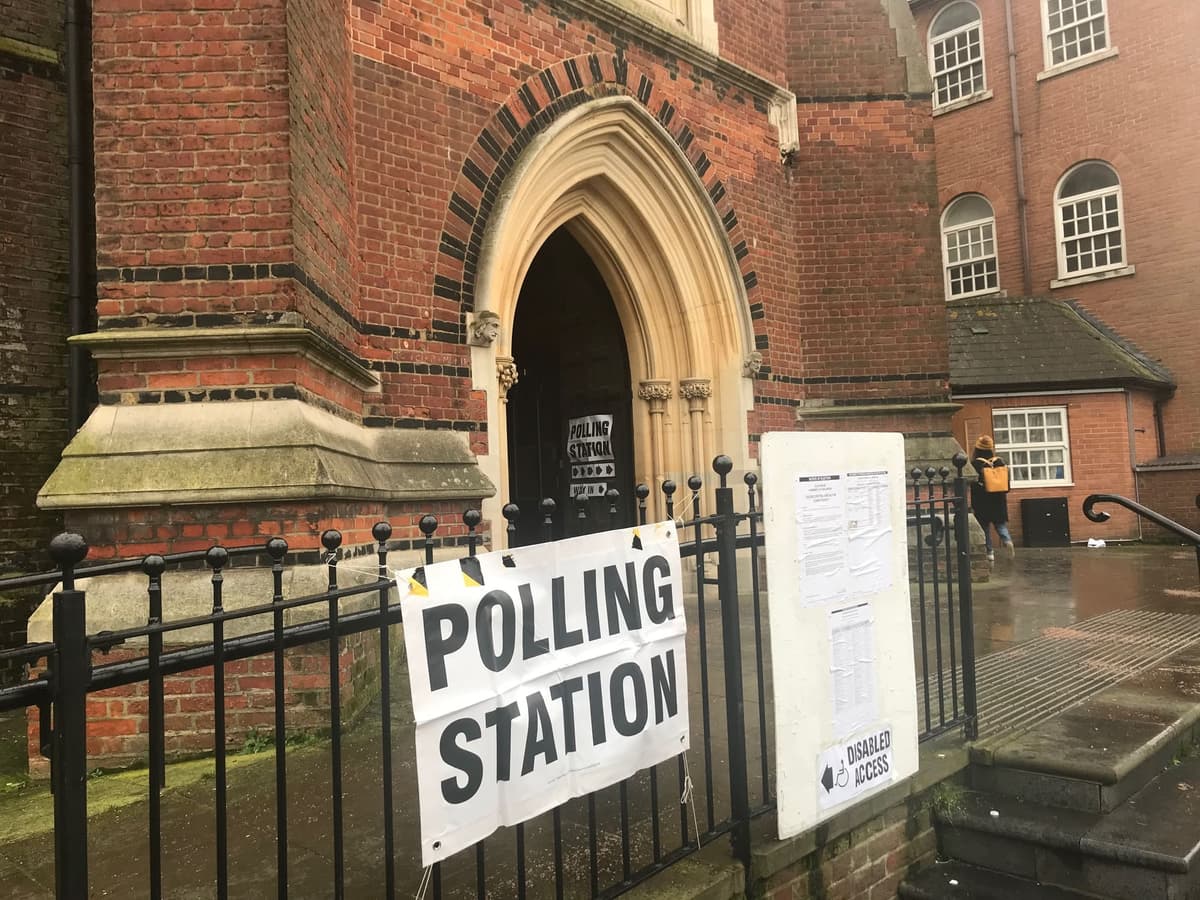
Forty-six million Britons are eligible to vote. Polling stations opened this morning at eight o’clock and will close at ten tonight. Because the predicted differences are so small, a recount is expected to be requested somewhere. As a result, the result will only be clear early in the night. For many Britons, probably only the next morning…