

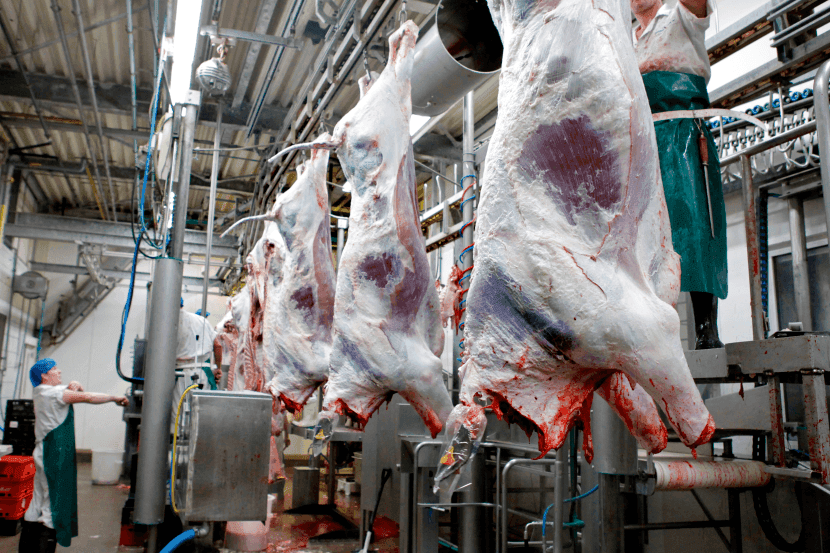
Hundreds of meat packers in southern Brazil have tested positive for the coronavirus, amid growing global concerns in the meat processing industry.
As a result, more slaughterhouses in Brazil now also face potential closures, just like in the United States, Germany, and the Netherlands. China, one of the world's largest food importers, is already anticipating disruptions to food supply and has begun purchasing from other countries.
The Brazilian meat packer BRF said that nearly seven percent of the tested workers had tested positive for the virus. They have been suspended as a precaution. Brazilian companies, including BRF and competitor JBS SA, are dealing with outbreaks that in some cases have already forced factory closures.
Promotion
BRF is among many food corporations in Brazil that, to remain operational, have signed agreements with the national government to improve protection for workers in meat factories. Aurora, one of the largest food companies in Brazil, said Friday in a statement that it will have more than 26,000 workers in 16 factories tested.
Chinese government officials have urged their companies and food industry to build up larger stockpiles. “They advised us to increase stocks and keep supply above normal levels. Things are not going well in Brazil,” warned a Chinese state buyer two weeks ago. He referred to Brazil as the main Chinese supplier of soybeans and an important meat exporter. One of the biggest concerns is how the epidemic in South America could affect supply to China.
The Chinese may be preparing for a second wave of the coronavirus elsewhere in the world, which has raised concerns about food chains and global supply. “There is a risk of pipeline failures due to coronavirus infections. For example, a shipping or receiving port might have to close,” said a senior Chinese trader.
Brazilian soybean shipments were delayed once in March. Since then, arrivals at Chinese ports from Brazil are back on schedule, but the Chinese agricultural conglomerate COFCO and grain reserve Sinograin have already partially shifted their purchases from Brazil to the United States.
China is also a major importer of meat and is struggling with a large domestic shortage following the outbreak of African swine fever. Imports from the United States—world’s largest exporter of pork—are therefore expected to increase, especially to the detriment of Brazil.