

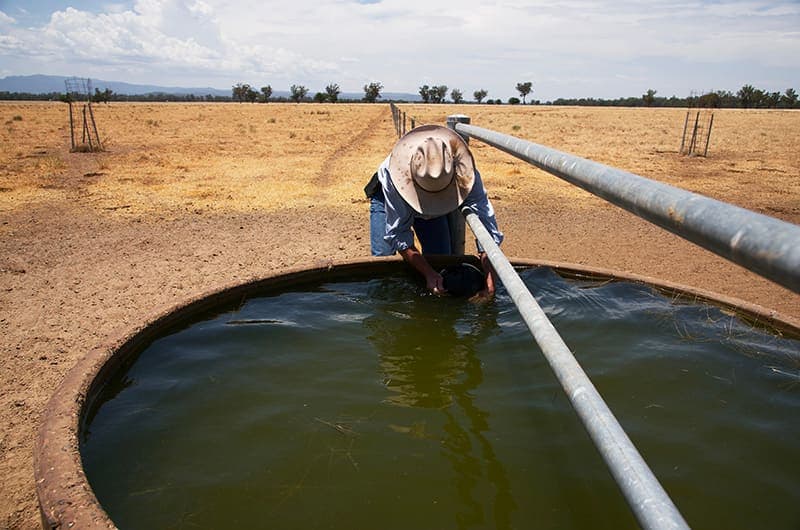
For the third consecutive year, Algeria, like other North African countries, has experienced insufficient rainfall. The shortage has now reached 20 to 30 percent. In Algeria, this has resulted in a decline in agricultural production, especially of grain.
As a result, Algeria’s bill for grain imports is expected to be about 17 percent higher, according to agricultural experts at the Dutch embassy in Algiers.
Reservoirs in the northern part of the country are on average only 44 percent full. The water in some lakes is no longer allowed to be used for irrigation, but exclusively for drinking water. In large parts of the country, including the capital Algiers, tap water is only available in limited quantities, sometimes just a few hours per week.
Promotion
Extraction from underground water reserves has further increased due to the ongoing drought: groundwater is being withdrawn on 80 percent of the total irrigated area by private initiatives from farmers and companies.
To address this situation, the Algerian government is now providing subsidies to farmers to purchase water-saving irrigation equipment, such as drip irrigation. The government is also investing in more facilities for the desalination of seawater and for the reuse of wastewater.
According to experts, the country needs to desalinate 2.5 billion cubic meters of seawater annually to meet the total drinking water demand. Water is also hardly reused for irrigation: only 17 of the 172 purification plants use treated water for agricultural irrigation.
With the current availability of 450,000 liters of water per capita per year, Algeria is not even halfway to the necessary amount. To guarantee food security, 15 to 20 billion cubic meters of water must be mobilized annually. Currently, Algeria mobilizes at most 4 to 5 billion cubic meters per year.
To link Dutch experience and expertise to the challenges in North African countries, research was needed into the current situation of water use and water problems in agriculture, as well as the challenges for improvement.
This recent Dutch study already concluded that the Maghreb countries face increasing water scarcity, exacerbated by inefficient water use and overexploitation of water resources.
The expected impact of climate change on agriculture is likely to increase further. This is accompanied by soil and groundwater salinization, even worsened by over-fertilization.