

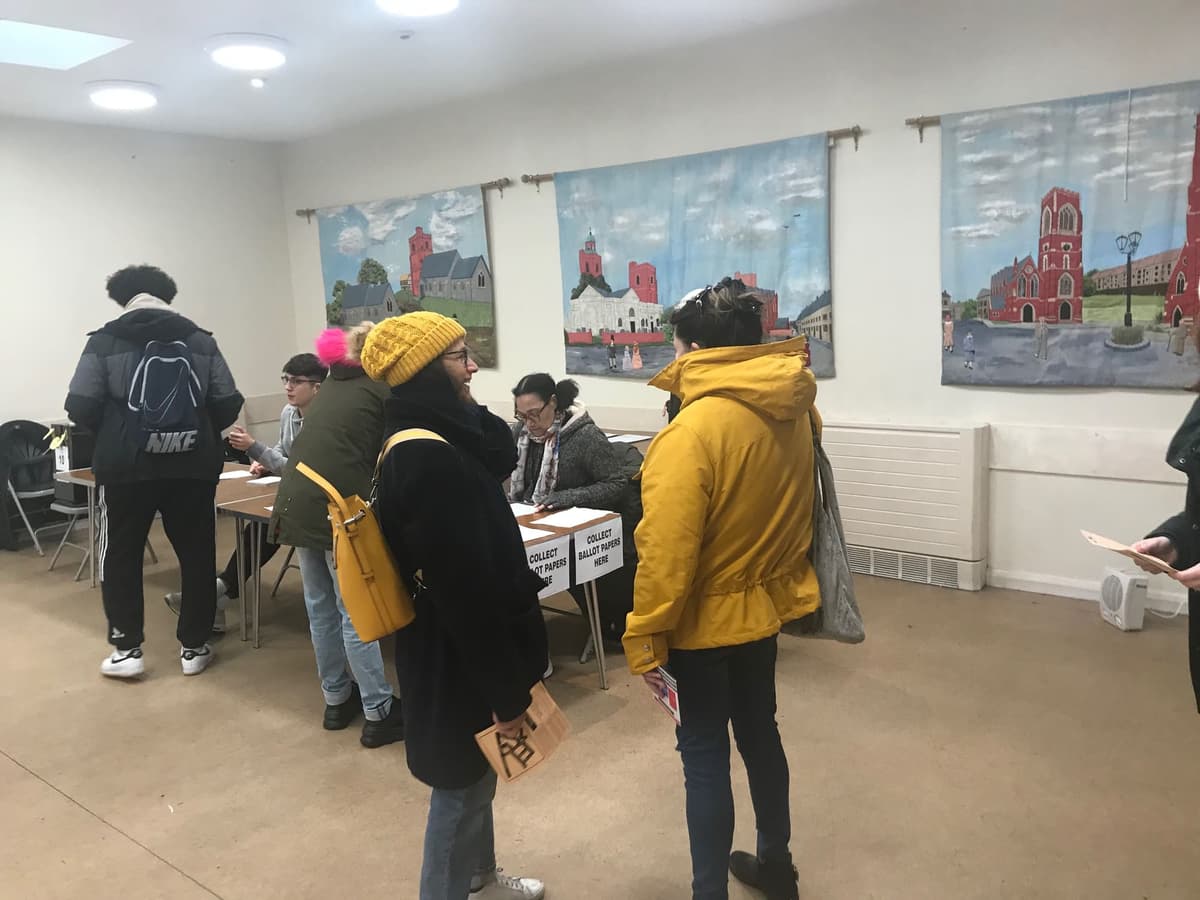
By continental European standards, hardly any well-organized election campaign has been conducted in Great Britain over the past six weeks. Due to the still cherished historical British constituency system, the direction and organization are largely in the hands of local party leaders and local candidates. This makes the organization of this national election campaign very similar to that of continental local elections.
Admittedly, the election programs were composed by the staff members of Johnson, Corbyn, Swinson, Farage, and Lucas, but the 650 local candidates ultimately have to deliver them to the voters. There are candidates who, during their door-to-door visits, refuse to defend their party's national program. There are also districts that do not want their national party leader to visit.
Partly for this reason, the campaign on British national television (BBC and ITV) initially revolved around one person and one issue (Boris and Brexit), then became a duel (Johnson and Corbyn, Brexit and Healthcare), and in the last two weeks has somewhat turned into a trio with the LibDems and their attempt at Social Renewal.
Promotion
In only two or three TV debates, candidates mostly avoided debating with each other, did not respond to concrete questions from the hosts, but mainly presented their own one-liners and slogans. Johnson even refused to be questioned on a famous British election program. The national party leaders were mainly in blame mode: everything was the other's fault.
Not responding to other parties' program points is quite normal in political debate: you do not talk about the other's points but present your own. On two or three important issues, moreover, it was even more difficult for the two most likely party leaders: their own party and party members are seriously divided on them. As a result, some issues had to be kept silent about.
The Conservative party strategists had decided that ‘Brexit and the EU’ would be their only topic. Therefore, Boris Johnson has said ‘Get Brexit Done’ about thirty to forty thousand times over the past weeks like some kind of puppet. In terms of presentation, when asked about most other issues, he seemed to be pulling at his hair, stammering and hesitating, or gave it a different twist.
For Corbyn, the differences between his voters and his active party members are even greater than with the Tories. Labour has a radical-left election program with more State, more collectivity, more laws and regulations, and less Free Market, less Capitalism, and less Upper Class. Essentially, Johnson and Corbyn must deliver something to their voters that their party leadership did not include in the program, while the party leadership offers something their voters do not want.
Therefore, the question soon will not be who has won, but who has managed to limit the damage as much as possible. To become a real winner, Johnson must gain at least about fifty seats. Corbyn must not lose seats and preferably gain some. Jo Swinson might win ten or twenty seats but will only truly break through as the third party at forty or fifty seats.
Four years ago, American documentary maker Michael Moore made a sort of public call to well-meaning but disappointed countrymen to ‘just’ vote for Hillary Clinton, because Donald Trump as president would be even worse. “For heaven’s sake, grit your teeth, don’t hesitate, just make that cross,” Moore said.
If a ‘hung parliament’ is chosen after tonight’s ballot results, these elections will have failed to resolve something but will only have worsened British isolation. And if Johnson does not win comfortably, the EU will be stuck with Brexit-like aftershocks for years to come.