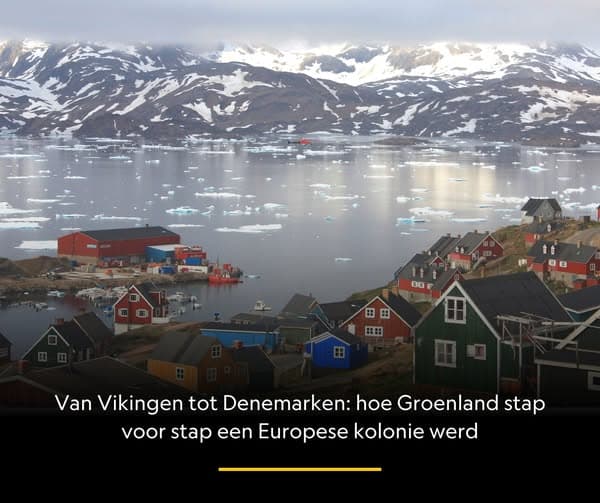
Attention now focuses on Greenland, after the US president repeatedly stated that the United States needs the territory for its national security. He did not rule out the use of all means, including military ones.
These statements have put NATO in an exceptional position. The alliance’s existing military plans assume external adversaries. There is no established protocol for a situation in which one NATO ally threatens another NATO ally.
Denmark and Greenland have therefore pushed for urgent consultations with US Secretary of State Rubio, but he is still avoiding them. According to Greenlandic and Danish statements, these talks are intended to clarify US intentions.
The Danish Prime Minister publicly warned that a military attack by one NATO ally on another would bring everything to a halt, including NATO itself and the security that has been built over decades.
Even without actual military action, the tone of the American statements is already having consequences. In multiple reactions, it is emphasized that escalating rhetoric alone undermines stability and mutual trust within the alliance.
The fact that the US does not hesitate to use military means was demonstrated by the Americans in recent weeks when they bombed several drug speedboats and carried out a military operation to abduct the president of Venezuela.
Several European leaders have openly expressed their support for Denmark and Greenland. It was stressed that this is not only a bilateral conflict, but a matter that affects all of Europe.
Meanwhile, within NATO, the warning is heard that merely having this debate is harmful. The alliance is built on values and trust, and the idea that the threat comes from within is seen as weakening.
Furthermore, there is the perception that the recently established new American defense and security policy gives the impression that the United States aims for hegemony over the entire Western Hemisphere. The US armed fist no longer extends only southward across the ‘Gulf of America’ and the ‘backyard’ in Central and South America, but now also northeastward.
In this light, it seems that Washington is leaving the Ukraine issue to Russia and the European Union. Europeans apparently must prepare for the reality that threats come not only from the east, but also that uncertainty, disruption, and aversion now threaten from the West.
Finally, many military analysts emphasize that waiting is not an option. European voices state that clarity is needed on the future of Greenland and NATO, while simultaneously acknowledging that there is no existing protocol for a crisis like this.